
 English
 Español
 中文简体
The KMQ-T positive-pressure firefighting air respirator communication mask and headset is a specialized piece of equipment that integrates respiratory protection and communication functions. Compared ...
See Details
2026-10-30
Content
The short answer is that a respirator protects you only as well as it seals to your face, and only as long as its filter or cartridge still has capacity. When you choose Respiratory protective equipment, check three things in order: a passed fit test for the face seal, a filter or cartridge matched to the actual hazard, and a written rule for when to replace or retire the parts.
Reuse is possible, but it depends on the type. A disposable filtering facepiece is built for limited reuse at best, while an elastomeric half mask or full face mask is designed to be cleaned and used for months, with filters or cartridges replaced on a schedule. The sections below explain how to apply each rule in daily work.
A filter rated at 95 percent or 99.97 percent only delivers that performance when air passes through the filter. If air leaks around the edge of the mask, it bypasses the filter completely. This is why regulators treat fit as a core requirement and not an optional extra.
In the United States, OSHA standard 29 CFR 1910.134 requires employers to fit test workers who use tight-fitting respirators before first use and at least annually afterward (source: OSHA, Respiratory Protection Standard). The same standard sets the pass level for a quantitative fit test at a fit factor of 100 for half masks and 500 for full facepieces (source: OSHA 29 CFR 1910.134, Appendix A).
Assigned protection factor (APF) tells you the level of protection a properly fitted and used respirator is expected to give. The table below shows common values from OSHA.
| Respirator type | APF | What it means in practice |
|---|---|---|
| Filtering facepiece or elastomeric half mask | 10 | Air inside the mask may contain up to one tenth of the outside concentration |
| Full facepiece air-purifying respirator | 50 | Better seal and eye protection for higher exposure levels |
| Loose-fitting powered air-purifying respirator | 25 | No fit test needed, useful where a seal is hard to achieve |
| Full facepiece powered air-purifying respirator | 1000 | Highest protection among air-purifying types |
Source: OSHA 29 CFR 1910.134, Table 1, Assigned Protection Factors.
OSHA states that a tight-fitting respirator must not be worn when facial hair comes between the sealing surface and the face, or interferes with valve function (source: OSHA 29 CFR 1910.134(g)(1)). Other common seal problems include:
For dust, fumes, mist and biological particles, the filter class decides how many particles are removed. Different regions use different standards, so always match the label to the standard that applies in your market.
| Standard | Class | Minimum filtration efficiency |
|---|---|---|
| NIOSH 42 CFR Part 84 | N95, R95, P95 | 95 percent |
| NIOSH 42 CFR Part 84 | N99, R99, P99 | 99 percent |
| NIOSH 42 CFR Part 84 | N100, R100, P100 | 99.97 percent |
| EN 149 | FFP2 | 94 percent |
| EN 149 | FFP3 | 99 percent |
| GB 2626-2019 | KN95 / KP95 | 95 percent |
| GB 2626-2019 | KN100 / KP100 | 99.97 percent |
Sources: CDC NIOSH, Understanding the Difference (N95 and surgical masks, filter classes); EN 149:2001+A1:2009; GB 2626-2019 Respiratory protection, non-powered air-purifying particle respirator.
According to NIOSH, the letter shows oil resistance. N filters are not resistant to oil, R filters are resistant to oil, and P filters are oil proof. If there is any oil mist in the workplace, such as from machining coolant or spray painting, choose R or P. In the GB standard, KN is for solid particles only, while KP can be used for both oil and non-oil particles.
A particle filter does nothing against gases. For solvents, acids and similar hazards, you need a chemical cartridge, and the cartridge must match the contaminant. Using the wrong cartridge can give a false feeling of safety because many gases have no warning smell at harmful levels.
| Hazard | Typical cartridge type | Common color code |
|---|---|---|
| Organic vapors such as paint thinner and many solvents | Organic vapor (OV) | Black (NIOSH) / Brown, type A (EN 14387) |
| Acid gases such as hydrogen chloride and chlorine | Acid gas (AG) | White (NIOSH) / Grey type B or yellow type E (EN 14387) |
| Ammonia and methylamine | Ammonia (AM) | Green (NIOSH) / Green, type K (EN 14387) |
| Particles in combination with vapors | Combination cartridge plus particle filter | Magenta for the P100 filter portion (NIOSH) |
Sources: NIOSH respirator selection guidance and ANSI/ASHI Z87 color convention for cartridges as reflected in OSHA respirator training materials; EN 14387 gas filter classification.
Many real jobs involve both particles and vapors. Spray painting is the classic case: paint mist is a particle hazard and the solvent is a vapor hazard. In this situation, an organic vapor cartridge paired with a particle pre-filter covers both. The pre-filter also protects the carbon bed from clogging, which helps the cartridge last longer.
Cartridges do not last forever, and waiting until you smell or taste a contaminant is not a safe method. OSHA requires that a change schedule be based on objective information, or that a cartridge with an end-of-service-life indicator be used (source: OSHA 29 CFR 1910.134(d)(3)(iii)). A practical schedule can use these inputs:
OSHA and NIOSH both provide calculation tools for estimating service life, and many cartridge makers publish their own data. A simple rule many safety teams adopt is to replace cartridges at the end of every shift when the contaminant is present, unless a calculated schedule proves a longer interval is safe. Replace immediately, whatever the schedule, if breathing becomes harder or you detect any odor or irritation while wearing the mask.
Reuse rules depend on the design. A disposable filtering facepiece has the filter built into the mask, so when the filter or the seal fails, the whole mask is finished. A reusable elastomeric mask has a durable facepiece and replaceable filters or cartridges, which makes it more economical for daily work and more consistent in fit.
In its guidance on reuse during supply shortages, CDC NIOSH said that if the manufacturer gives no advice, a filtering facepiece should be used no more than five times, with a proper user seal check each time (source: CDC, Implementing Filtering Facepiece Respirator Reuse, Including Reuse after Decontamination). This was a contingency measure, not a normal practice. In ordinary conditions, discard a disposable mask when:
For elastomeric masks, follow a routine after each shift. Disassemble the facepiece, remove filters and cartridges, wash the rubber parts in warm water (below about 49 degrees Celsius) with mild detergent, rinse with clean water, and let them air dry away from direct heat. OSHA gives these cleaning conditions in 29 CFR 1910.134 Appendix B-2, Respirator Cleaning Procedures.
Before each use, inspect these parts:
Store the mask in a clean, sealed bag or box, away from sunlight, heat, dust and chemicals. Do not hang it by the straps, and do not leave it in a hot vehicle, because heat and deformation can ruin the sealing edge. Unused cartridges should stay in their sealed packaging until needed, since carbon begins to absorb moisture and vapors from the air once the package is opened.
| Mistake | Why it is a problem | Better practice |
|---|---|---|
| Skipping the fit test | Leakage around the edge can bypass the filter entirely | Fit test before first use and every year, and after major face changes |
| Using a particle filter for solvent vapor | Particle media does not capture vapors | Select an organic vapor cartridge, with a pre-filter if mist is present |
| Waiting for a smell before changing cartridges | Some gases cause harm below the odor threshold | Use a calculated change schedule or an end-of-service-life indicator |
| Storing the mask loose in a toolbox | Dust and deformation damage the seal and valves | Use a clean sealed container after cleaning |
| Wearing it under a beard | Hair breaks the seal | Shave the sealing area or use a loose-fitting powered respirator |
| Sharing one mask between workers | Hygiene and fit problems | Issue personal masks and keep fit test records |
Before you order or issue any respirator, walk through this short list. It helps you avoid the most common mismatches between the hazard and the equipment.
Our Respiratory protective equipment range is organized to support this process, so buyers can compare facepiece types and matching filters in one place. Check the specifications and certification information on the product page and confirm that they meet the standard required in your market before purchase.
Not necessarily. Carbon keeps absorbing vapors from the air even when you are not working, if the cartridge is exposed. Seal cartridges in an airtight bag between uses and still follow a calculated change schedule, since a long storage period after opening reduces remaining capacity.
There is no fixed calendar interval that suits every case. Replace it when inspection shows cracks, stiffness, permanent deformation or a failed seal check, and follow the manufacturer instructions for the maximum service life. If you lose or gain a lot of weight, or have dental work that changes your face shape, repeat the fit test.
Not always. A higher class gives more filtration but may increase breathing resistance, which affects comfort and wearing time. Choose the lowest class that gives the protection factor you need, then pay close attention to fit, since a well fitted 95 percent filter often protects more than a poorly fitted 99.97 percent filter.
Yes. Use only respirators certified under the standard recognized in your country, such as NIOSH approval, EN 149 or EN 140 series conformity, or GB 2626 compliance. Certification means the filter efficiency and breathing resistance have been tested by a third party under controlled conditions.
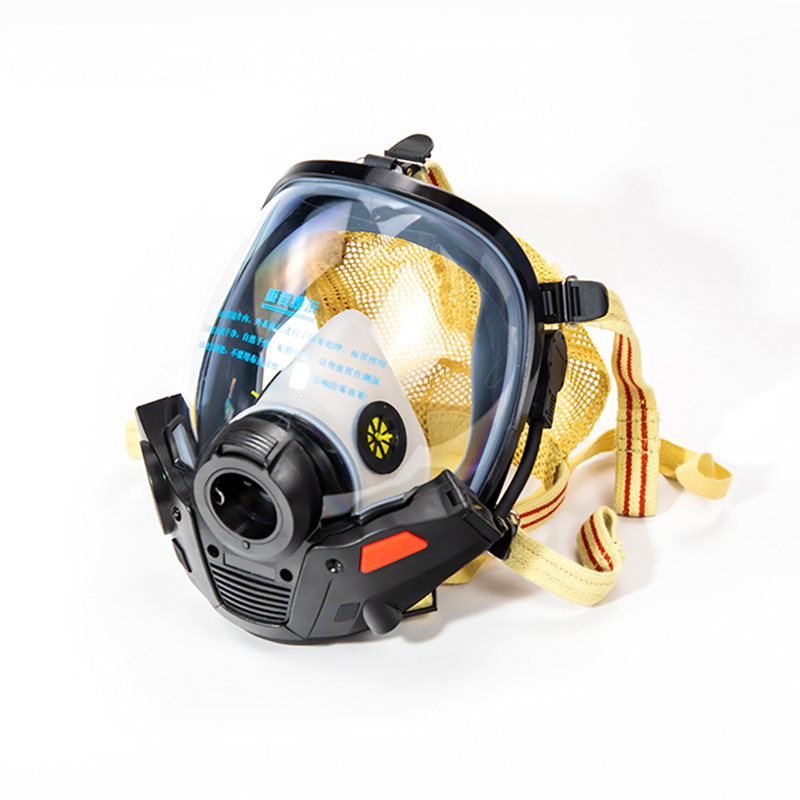
The KMQ-T positive-pressure firefighting air respirator communication mask and headset is a specialized piece of equipment that integrates respiratory protection and communication functions. Compared ...
See Details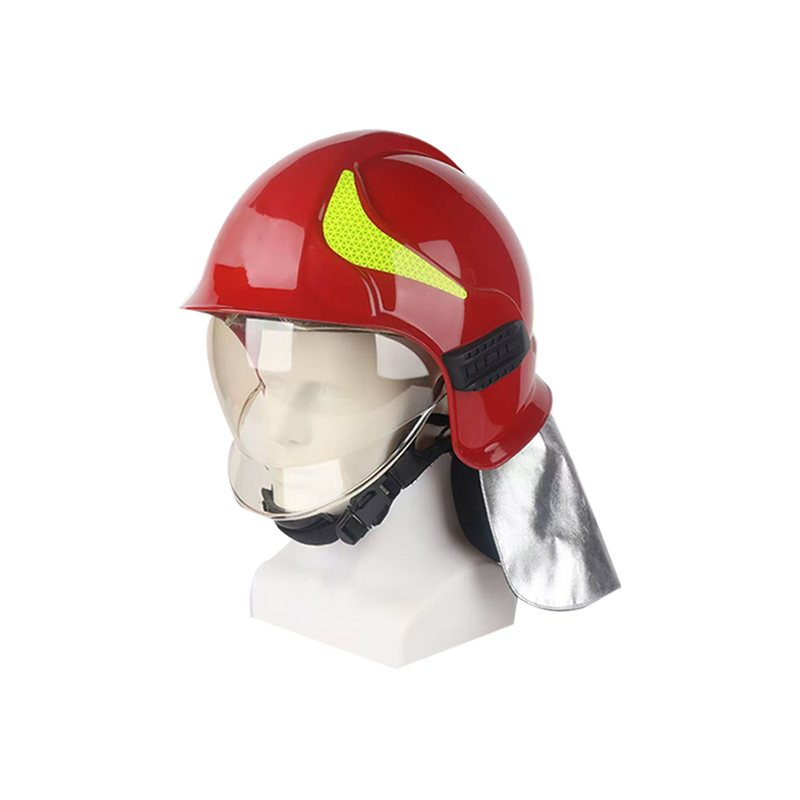
The Fire helmets are composed of a helmet shell, a mask, a cape, a buffer layer and other parts, with a Full Face-helmet design and Double Goggles styles.It has the properties of anti-sharp...
See Details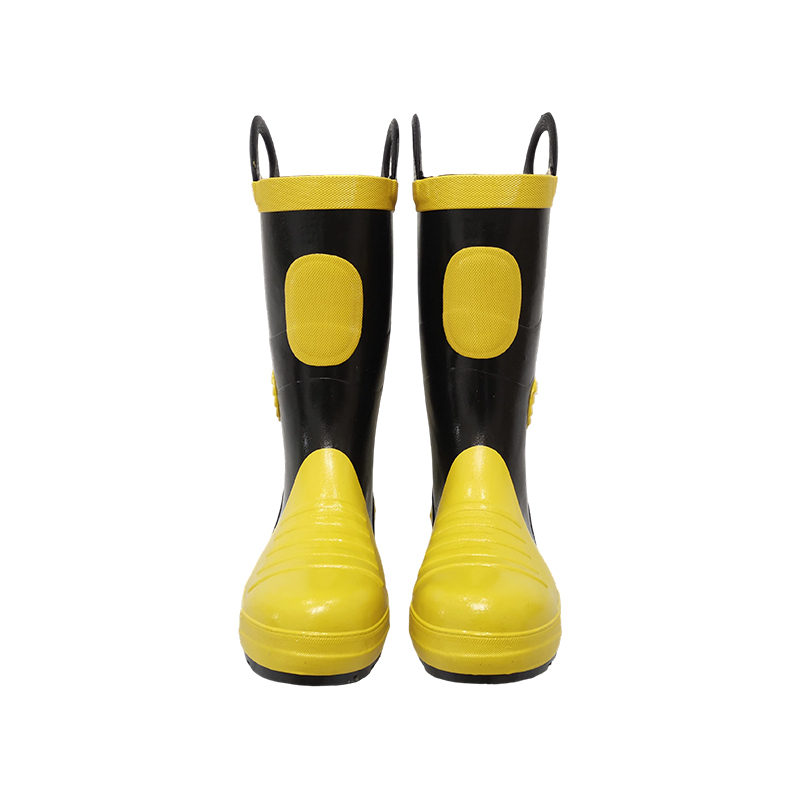
Description: The fire boots are made up of 2 parts, the shoe and the boot upper. Black colour with yellow lines. Multi-layers for the whole body. Smash-proof steel toes of the fire boots have inside &...
See Details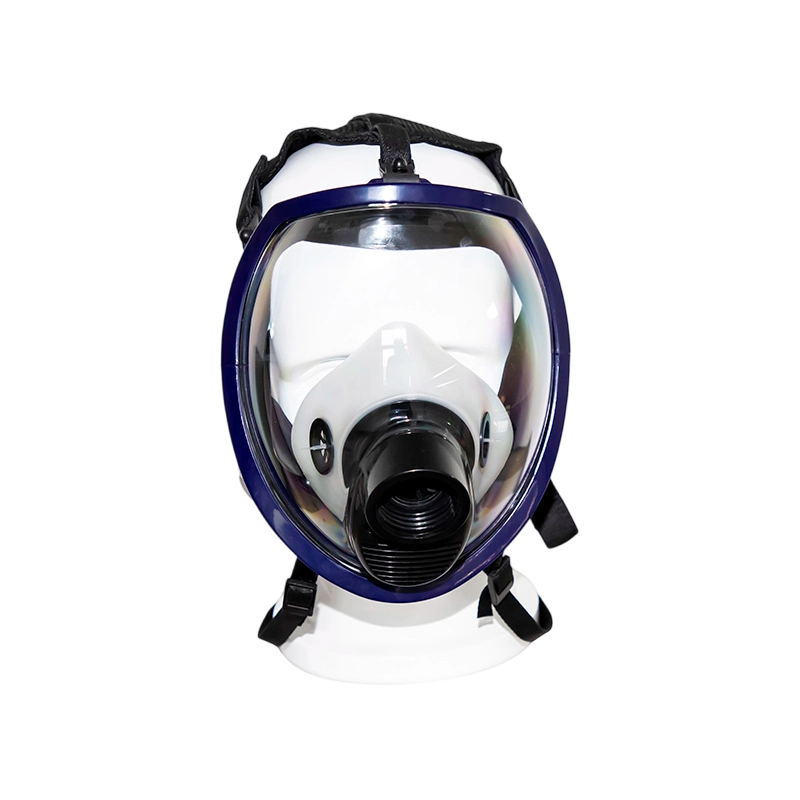
Comply with all performance requirements specified in GB 2890-2022 Respiratory Protection - Self-priming Filter Type Gas Masks. Provide complete and valid test reports issued by national authoritative...
See Details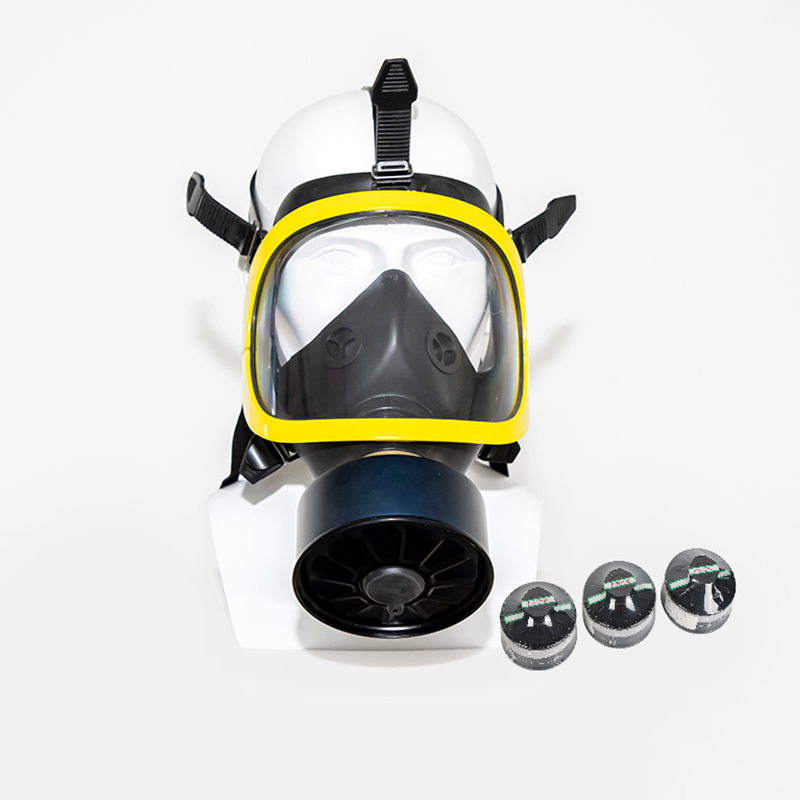
The full-face respirator (conical mask) is a filtering, full-Vision personal respiratory protective device. Compared to similar protective masks, its core advantage lies in its specially treated face ...
See Details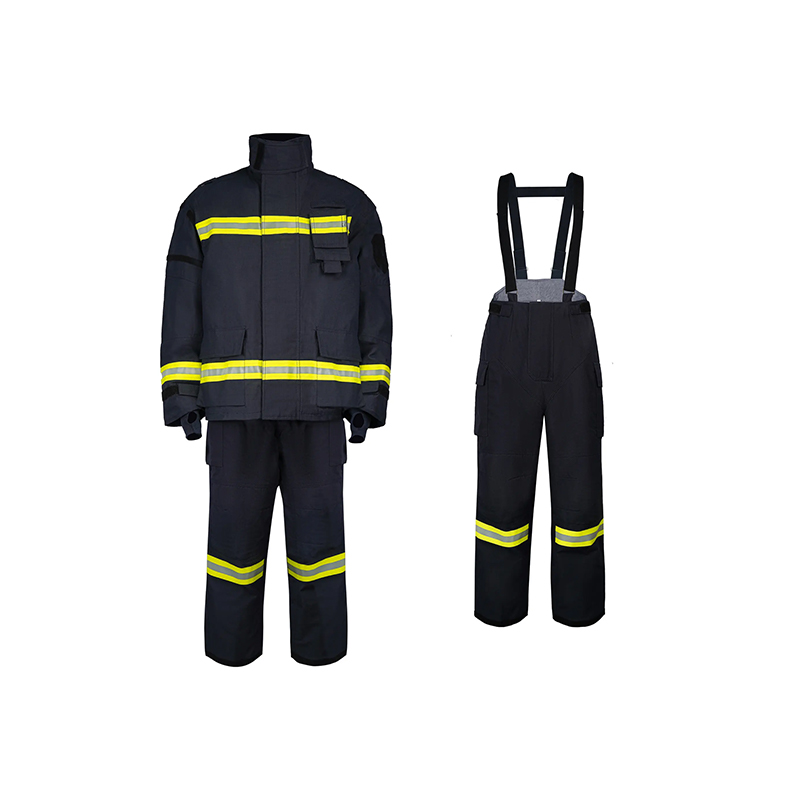
Firefighting protective clothing is specialized personal protective equipment worn by firefighters during fire suppression and rescue operations. It features a multi-layered design aimed at providing ...
See Details
For any questions and feedback from customers, we will reply patiently and meticulously.


WhatsApp: 8618262215597
PHONE : +86-15370678666
EMAIL : zhouli@ntkaen.com
TEL: +86-513-88762099
Nantong Kaen Safety Equipment Co., Ltd. All Rights Reserved. ALL RESERVED. OEM Rescue Equipment Manufacturer Fire Protection Equipment Factory
