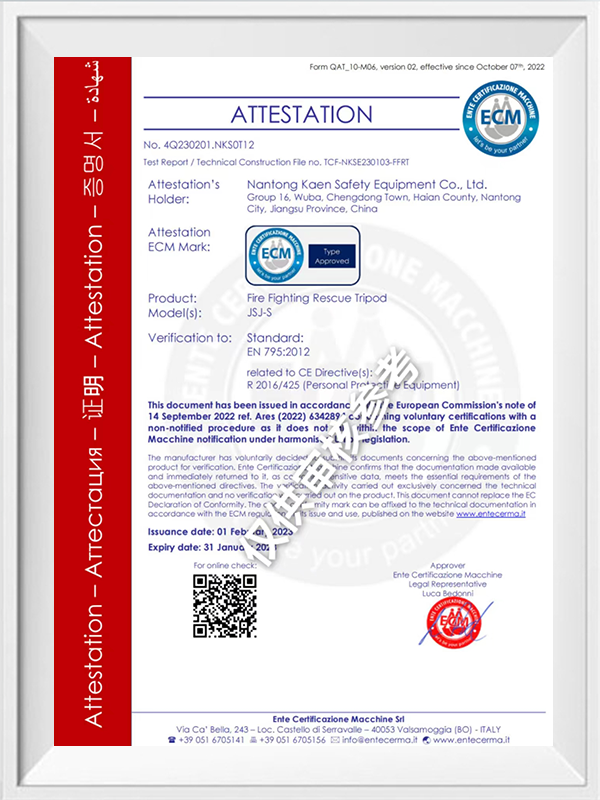
Nantong Kaen Safety Equipment Co., Ltd. is a China
Wholesale Personal protective equipment series Supplier and Personal protective equipment series Factory
. It is located in Haian, a renowned county in Jiangsu Province, and situated within the National Economic Development Zone of Haian, Jiangsu, with convenient transportation and well-developed logistics networks.
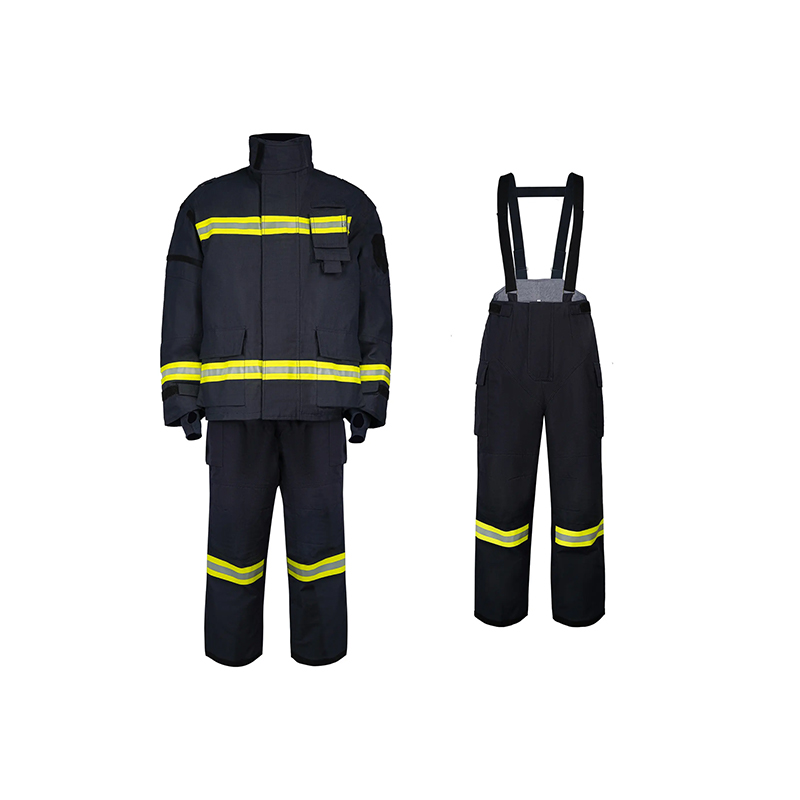
Firefighting protective clothing is specialized personal protective equipment worn by firefighters during fire suppression and rescue operations. It features a multi-layered design aimed at providing ...
Applications
Fire rescue: Firefighters wear it when entering the fire scene for firefighting and rescue tasks.
Hazardous chemical accidents: Used to deal with hazardous situations such as chemical ...
The 97 Fire Protection Suits are designed to provide reliable safety and protection for firefighters, rescue personnel, and workers exposed to fire-related hazards. Ideal for various applications, inc...
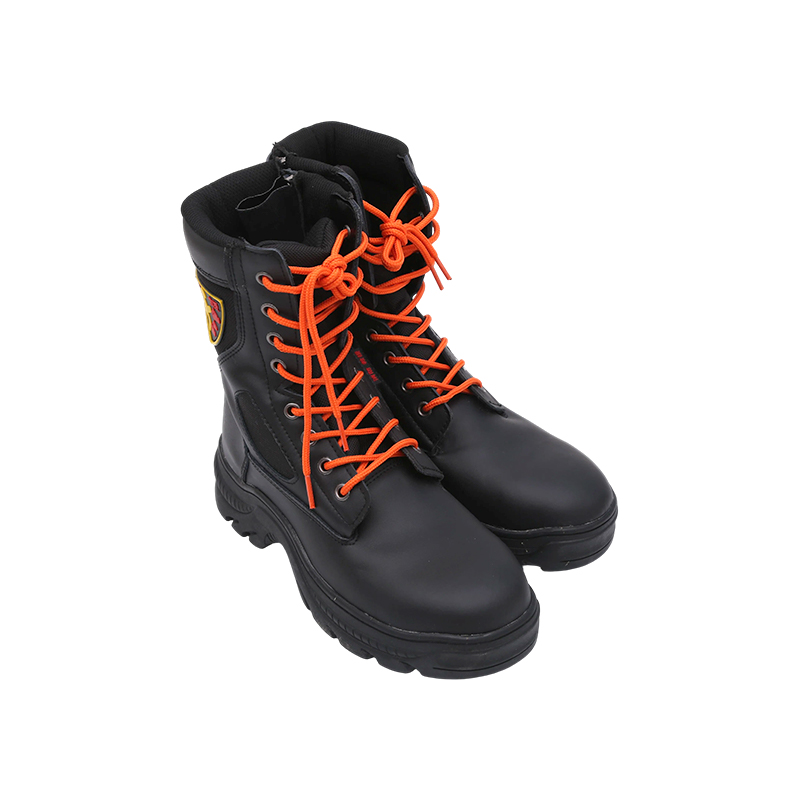
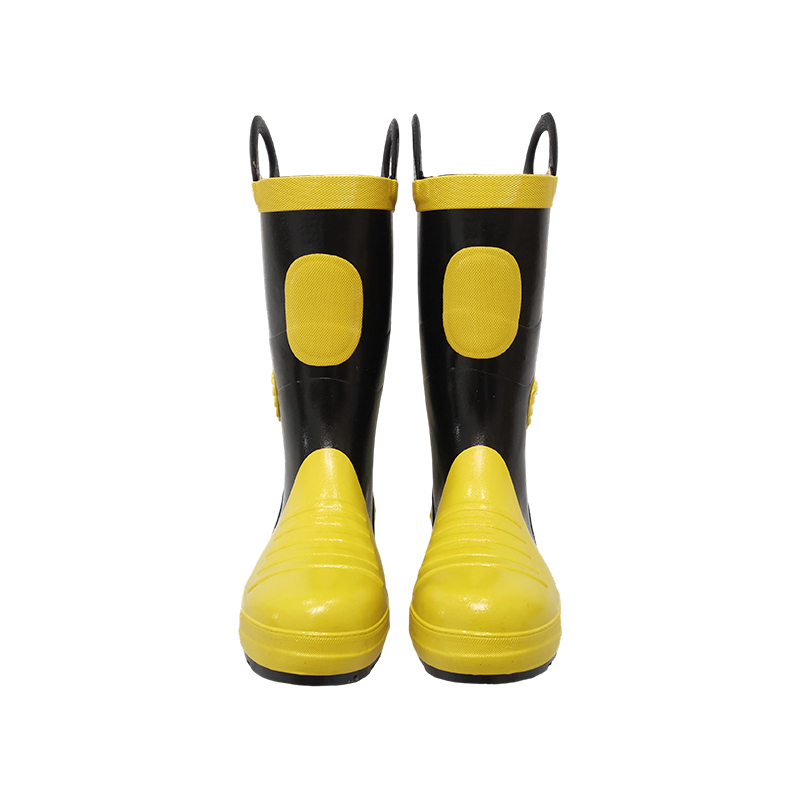
Firefighting boots are specialized protective footwear designed for firefighters.
They provide protection against high temperatures, water, chemicals, and mechanical hazards while offering comfort an...
Description:
The fire boots are made up of 2 parts, the shoe and the boot upper. Black colour with yellow lines.
Multi-layers for the whole body. Smash-proof steel toes of the fire boots have inside &...
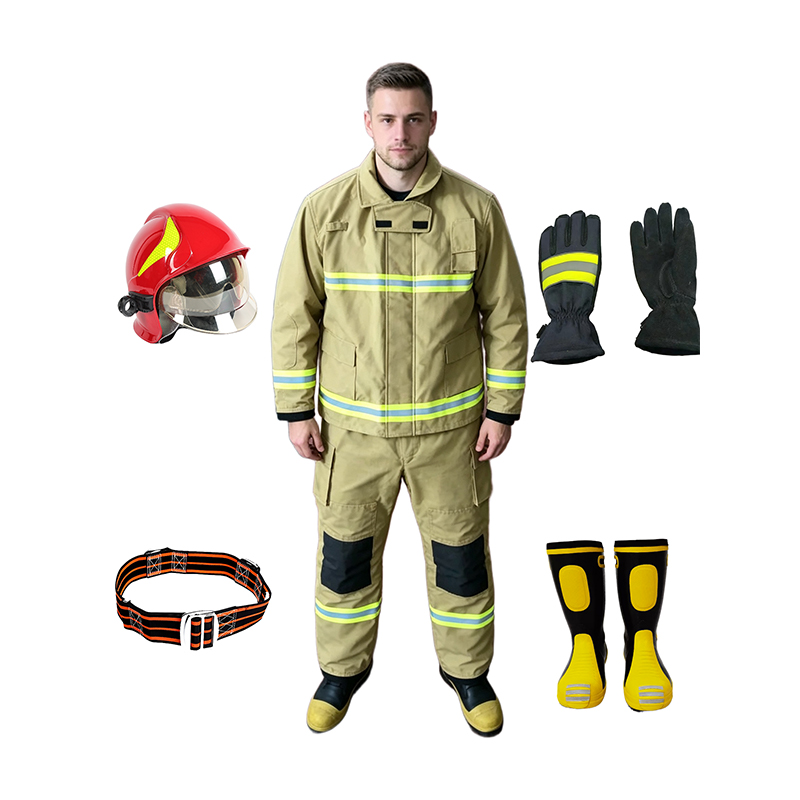
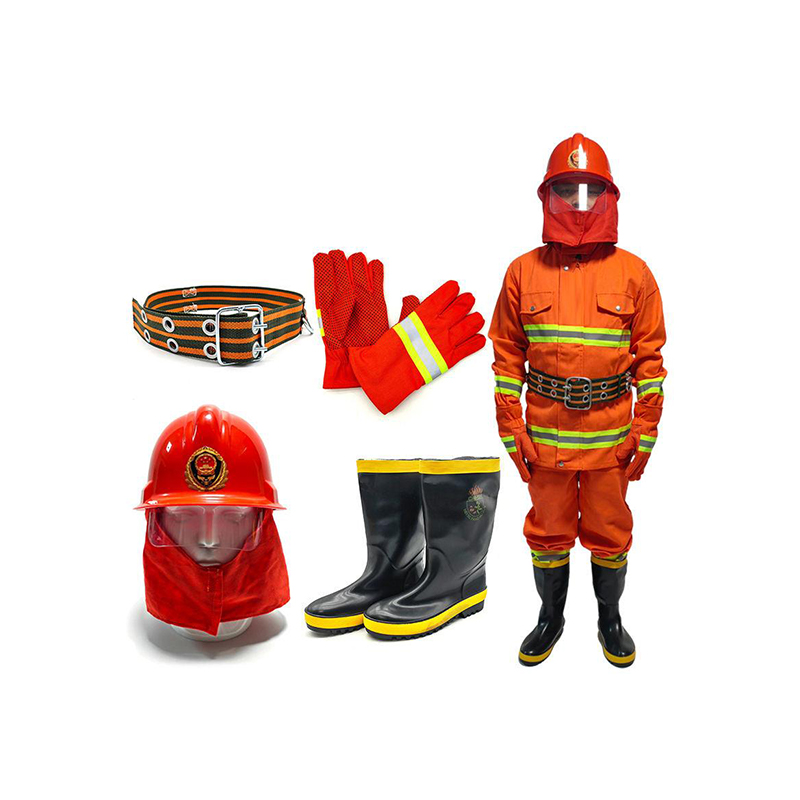
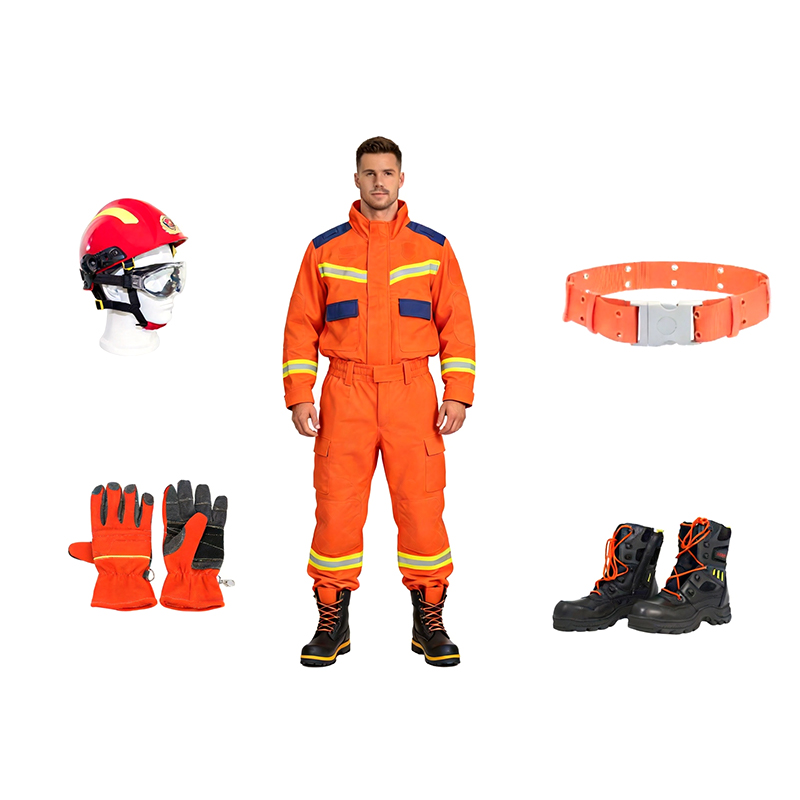
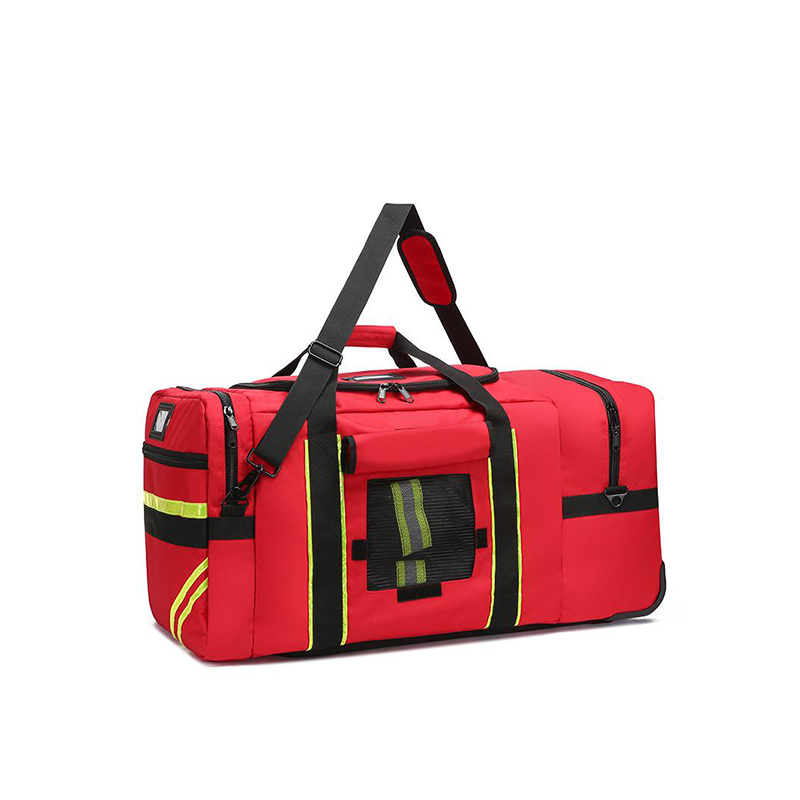
The primary purpose of a fire rescue kit is to provide essential equipment and supplies for rescuers and trapped individuals during fires, accidents, or emergency situations, ensuring safety and enabl...
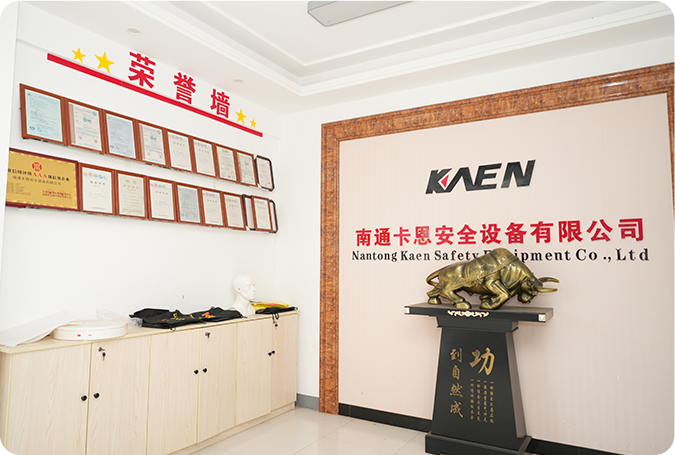
Nantong Kaen Safety Equipment Co., Ltd. is a professional enterprise specializing in the production and sales of fire safety protection equipment. It is located in Haian, a renowned county in Jiangsu Province, and situated within the National Economic Development Zone of Haian, Jiangsu, with convenient transportation and well-developed logistics networks.
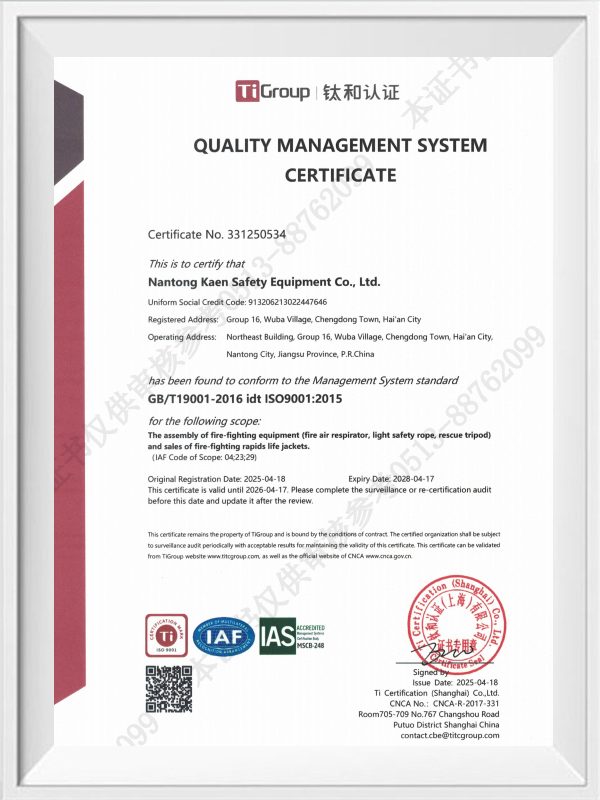
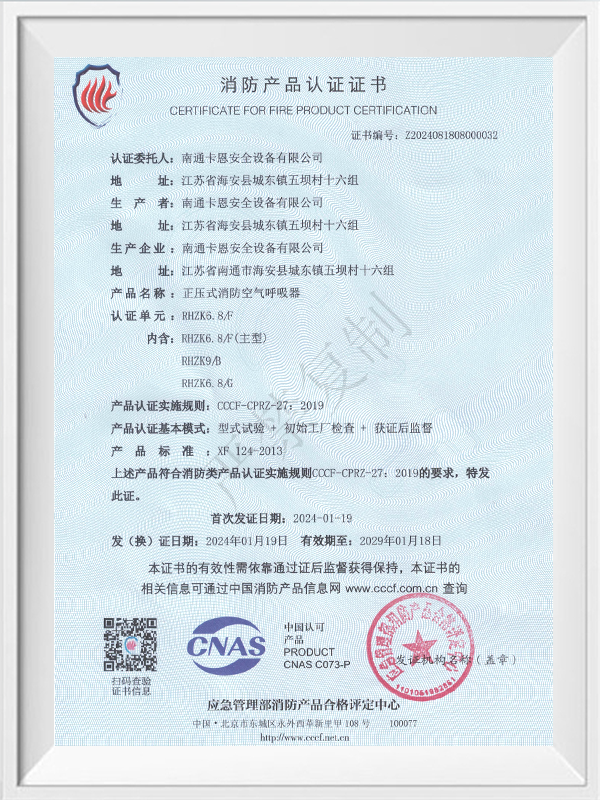
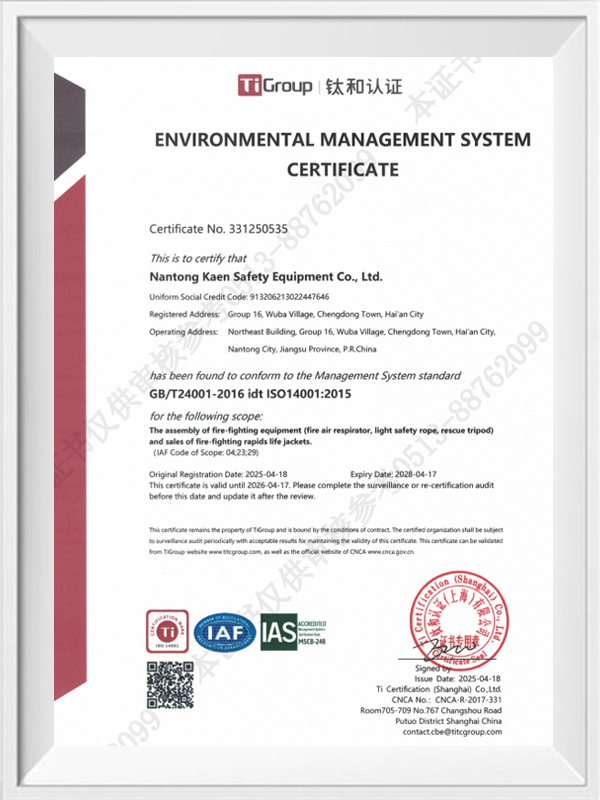
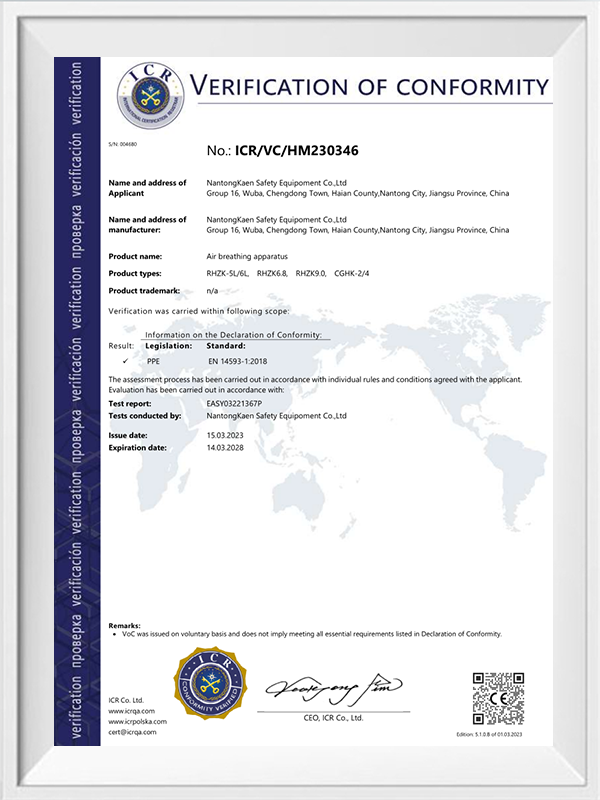
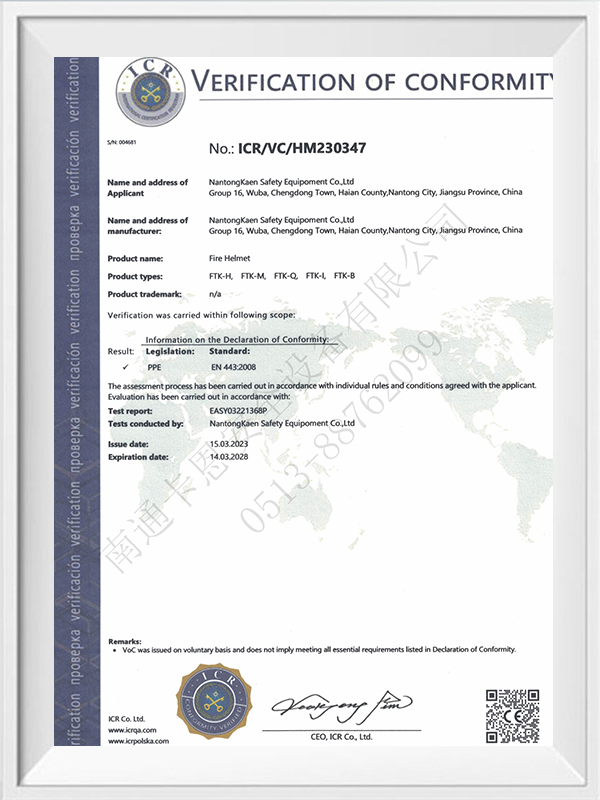
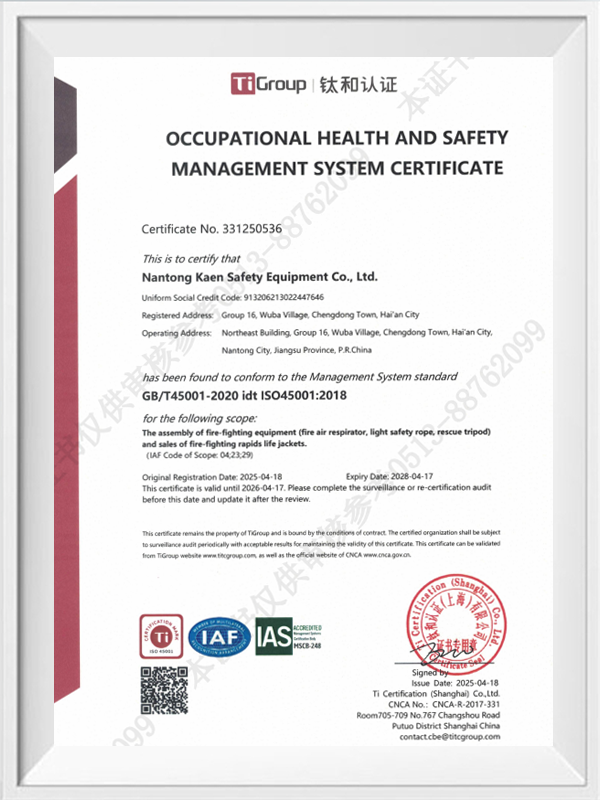
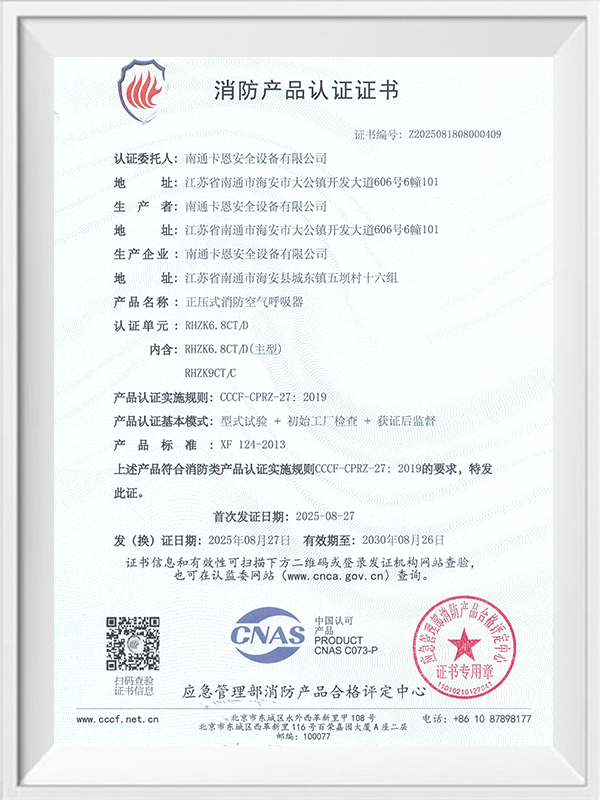
Covering a floor area of 5,000 square meters, our company is equipped with modern and advanced production equipment and a team of professional management personnel. We have obtained the ISO9001 International Quality Management System Certification, and our products have passed the CE, CCCF, and other relevant certifications. Endowed with strong technical strength, we now have 36 technical personnel, including 5 senior engineers and 8 engineers. Our robust technical capabilities provide a solid guarantee for product after-sales services. However, the existing safety product service sector is still far from fully addressing people's demands for fire protection, safety,y and occupational health in work and daily life.
As one of the leading manufacturers in the fire protection industry, Nantong Kaen Safety Equipment Co., Ltd. is a Wholesale Personal protective equipment series Supplier and Personal protective equipment series Factory, specializes in the R&D, production and sales of a full range of products, including air breathing apparatus series, fire helmet series, fall protection series (rescue tripods, safety ropes), hydraulic breaking and dismantling tool sets, personal protective equipment and other special protection equipment and facilities.
Our products are widely applied in the fire protection, metallurgy, chemical industry, military, police, and other public safety sectors. We provide customers with 24/7 uninterrupted services and always adhere to the three core principles: the most favorable price, superior quality,y and excellent service.
We are dedicated to providing first-class fire safety equipment and high-quality after-sales services for customers at home and abroad, and we look forward to cooperating with people from all walks of life.
We know we must go all out!
Kaen is your safety guardian, and Kaen will be with you forever!
A worker at the bottom of a manhole collapses. The entry team has a tripod, a winch, and a full-body harness. But if that harness has only a back D-ring, the retrieval line can lift the worker at an ...
A paint shop supervisor we worked with used to order disposable masks by the case. Then the primer changed to a solvent based product, odour breakthrough became a daily complaint, and the real proble...
A supervisor pulls a glove off at the end of a shift and finds a small puncture near the base of the thumb. The glove carried an ANSI puncture level 4 marking. The wire still went through. Nothing pr...
A technician on a metal finishing line pulls on a thin nitrile glove that shrugs off the degreasing tank and splits on the first sharp flange. On the next shift a glass handler wears an aramid cut gl...
A maintenance technician walks along a 14-meter loading platform edge, clipping a lanyard to a steel cable overhead. The cable runs between two anchor points and passes through intermediate brackets....
Personal protective equipment series Industry knowledge
What a Personal Protective Equipment Series Covers
A Personal protective equipment series brings together the individual garments and gear needed to protect a firefighter or rescue worker across the full range of hazards they encounter on a single call: heat, impact, chemical contact, sharp debris, and low visibility. This typically spans head protection, respiratory gear, protective clothing, gloves, and footwear, each addressing a distinct hazard type but designed to function together as a complete protective system rather than a collection of unrelated items. The value of treating these as a coordinated series rather than isolated purchases is that gaps between components, such as a glove cuff that doesn't seal against a jacket sleeve, can create an exposure point even when every individual item meets its own protective standard.
The direct takeaway for procurement and safety teams is that equipment should be evaluated on measurable factors: protective coverage against the specific hazard type, mobility and range of motion, durability across repeated use cycles, and compatibility between components worn simultaneously. This article walks through measured performance data, durability trends, and structural comparisons to give a practical basis for building a complete, dependable protective equipment set.
Core Performance Metrics Across Equipment Categories
When evaluating a personal protective equipment series, five metrics matter most: protective coverage, mobility, durability against repeated wear cycles, comfort during extended use, and compatibility with other components in the series. The horizontal bar chart below scores four common equipment categories against these metrics on a 0-100 index built from typical field performance ranges. Protective clothing scores highest on protective coverage, reflecting its role as the primary barrier against heat and chemical contact, while gloves score highest on mobility, since fine motor control matters as much as protection for tasks requiring hand dexterity.
This index-based comparison confirms that no single component in a personal protective equipment series covers every requirement, which is exactly why the series approach matters: each item is optimized for its specific role, and the full protective effect depends on all components working together as a complete system rather than any one piece carrying the entire burden.
Protective Coverage Degradation Across Wear Cycles
A key durability metric for protective clothing within the series is how effectively it maintains its barrier properties across repeated laundering and wear cycles. The line chart below tracks retained protective performance as a percentage of original rating across five stages of wear cycles, from an early 25 cycles up to 200 cycles. A gradual, controlled decline is expected as fabric fibers experience normal wear, but the trend should remain smooth rather than dropping sharply at any single stage, since a sudden decline would indicate a material or construction issue rather than routine aging. This kind of longitudinal data helps safety officers plan replacement schedules proactively rather than waiting for a failed inspection to trigger action.
Retained protective performance declines from roughly 99% at 25 wear cycles to about 81% at 200 wear cycles, a gradual pattern that stays within acceptable service ranges for much of that range but signals that inspection frequency should increase as garments approach the higher end of their rated cycle life. This kind of data is exactly why personal protective equipment series items should follow a scheduled inspection and replacement program rather than relying solely on visual condition checks.
Where Different Components Are Used Most
The maintenance and replacement demand across a personal protective equipment series varies depending on how each component is exposed to wear during typical operations. The vertical bar chart below shows a representative breakdown of maintenance activity across common categories, based on aggregated field usage patterns. Protective clothing leads the distribution due to its broad surface contact with heat and debris, followed by gloves, footwear, and head protection components.
Protective clothing accounts for roughly 34% of typical maintenance activity, reflecting both its broad surface contact with heat and debris and the frequency of laundering required to maintain contamination control. Gloves follow closely, since repeated flexing and grip contact wears the material faster than more rigid components like head protection.
Comparing Coverage Priorities Across Equipment Types
A radar chart is useful for comparing how different components within the equipment series prioritize protection differently. The chart below compares protective clothing against gloves across heat resistance, mobility, dexterity, durability, and coverage area. Protective clothing extends further on heat resistance and coverage area, since it protects the largest surface area of the body, while gloves extend further on mobility and dexterity, reflecting the need for fine motor control during tool use and equipment operation. This kind of comparison helps clarify why each item in a personal protective equipment series is engineered around a distinct set of priorities rather than a single universal specification.
Neither shape covers every dimension, reinforcing why a complete personal protective equipment series should be inspected and maintained according to each component's own risk profile rather than a single uniform schedule. Treating every item the same way often means over-inspecting low-wear components while under-inspecting the ones that degrade faster under real-world conditions.
Practical Selection and Inspection Guidance
Building a dependable personal protective equipment series starts with matching each component to the specific hazard type and duty cycle it will face. The table below summarizes practical guidance across common equipment categories.
Component Selection Reference
Table 1: Practical guidance for personal protective equipment series component selection
Component
Primary Function
Inspection Priority
Protective Clothing
Heat and debris barrier
After every significant exposure
Gloves
Hand protection and grip
Before every use
Footwear
Foot protection and traction
Scheduled periodic check
Head Protection
Impact and heat protection
After any impact exposure
Before placing equipment into active service, a few additional checks help confirm readiness across the series:
Confirm all components fit together properly, with no exposed gaps between garments.
Inspect protective clothing for tears, thinning, or seam separation before each deployment.
Check gloves for cracking, stiffness, or reduced grip texture.
Verify footwear soles and toe protection remain intact and properly sealed.
Track wear cycles for each component to plan replacement before performance drops below acceptable levels.
The predictable wear curves referenced throughout this article depend on consistent manufacturing practices across every component in a personal protective equipment series. Fabric weave density, seam stitching quality, and material formulation all contribute to dependable behavior once equipment is deployed in active field conditions. Automated cutting and in-process testing help minimize unit-to-unit variation, which matters most in high-stakes situations where a compromised component could affect the entire protective system a wearer depends on.
Standard quality checkpoints such as heat resistance testing, tensile strength verification, and seam integrity checks support the reliability trends discussed earlier in this article. For safety officers sourcing equipment at scale, asking about a supplier's process controls is often just as informative as reviewing published specifications alone.
About Nantong Kaen Safety Equipment Co., Ltd.
Nantong Kaen Safety Equipment Co., Ltd. is a professional enterprise engaged in the production and sales of fire safety protection equipment, including a personal protective equipment series covering clothing, gloves, footwear, and head protection for fire and rescue applications. The company is located in Haian, a renowned county in Jiangsu Province, and is situated within the National Economic Development Zone of Haian, Jiangsu, offering convenient transportation and well-developed logistics support for both domestic and international customers.
Drawing on its location within a well-connected industrial zone, the company focuses on producing reliable safety equipment while maintaining efficient logistics that support timely delivery. This combination of manufacturing focus and logistical positioning allows Nantong Kaen Safety Equipment Co., Ltd. to serve fire departments and industrial safety programs seeking dependable personal protective equipment solutions for demanding field conditions.
Frequently Asked Questions
Q1: Why is it important to treat protective equipment as a coordinated series rather than separate items?
A1: Gaps between individual components, such as a glove that doesn't seal against a jacket sleeve, can create an exposure point even when every item individually meets its protective standard.
Q2: How does protective performance change as clothing goes through repeated wear cycles?
A2: Performance typically declines gradually and predictably across hundreds of wear cycles, which supports scheduled inspection and replacement rather than reacting only to visible damage.
Q3: Which component typically requires the most frequent inspection?
A3: Gloves generally require checking before every use due to repeated flexing and grip contact, while other components like head protection are inspected after specific exposure events.
Q4: Should every component in the series follow the same inspection schedule?
A4: No, each component wears differently, so inspection frequency should match its individual risk profile rather than applying one uniform schedule across the entire series.
Q5: What manufacturing factors most affect equipment reliability?
A5: Fabric weave density, seam stitching quality, and material formulation consistency are key factors, supported by process checks such as heat resistance testing and seam integrity verification during production.


 English
 Español
 中文简体
中文简体