Nantong Kaen Safety Equipment Co., Ltd. is a China
Rescue Knife Manufacturer and OEM Rescue Knife Company
. It is located in Haian, a renowned county in Jiangsu Province, and situated within the National Economic Development Zone of Haian, Jiangsu, with convenient transportation and well-developed logistics networks.
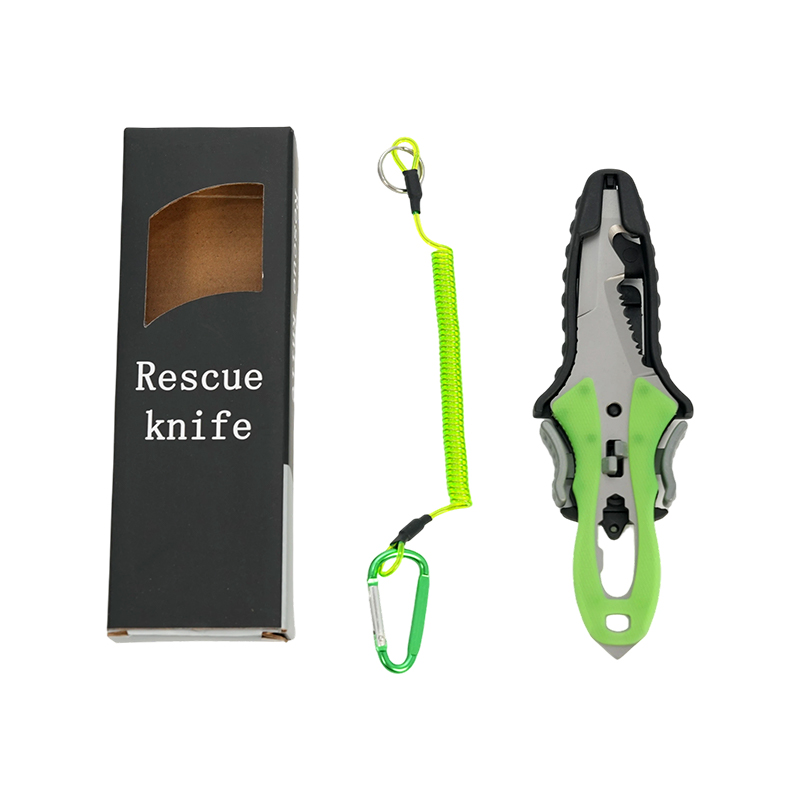
The SY-D170-KE Water Rescue Knife is designed for emergency water rescue. It features a blunt-tip multi-functional blade for cutting, sawing, hooking, and striking. The 402 stainless steel blade is ti...
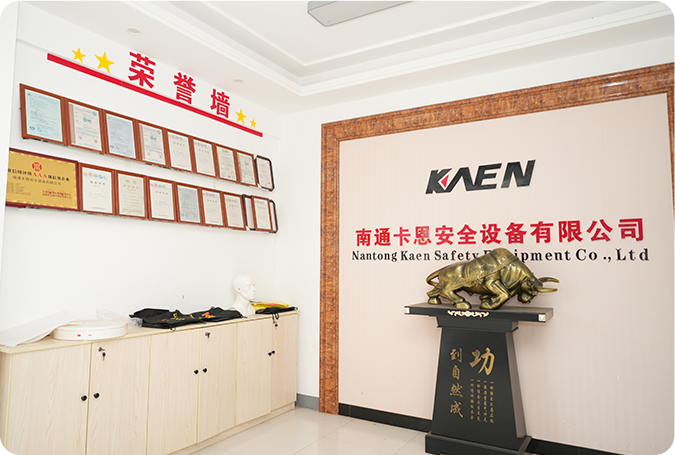
Nantong Kaen Safety Equipment Co., Ltd. is a professional enterprise specializing in the production and sales of fire safety protection equipment. It is located in Haian, a renowned county in Jiangsu Province, and situated within the National Economic Development Zone of Haian, Jiangsu, with convenient transportation and well-developed logistics networks.
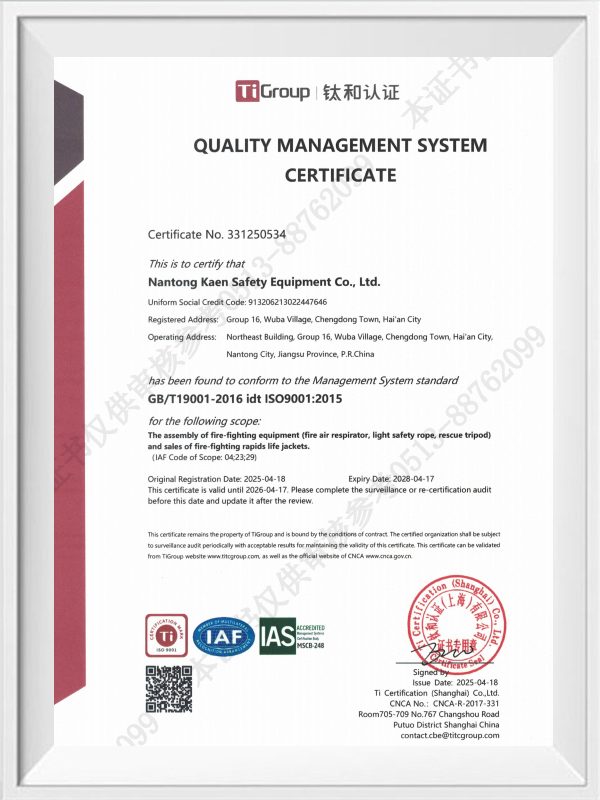
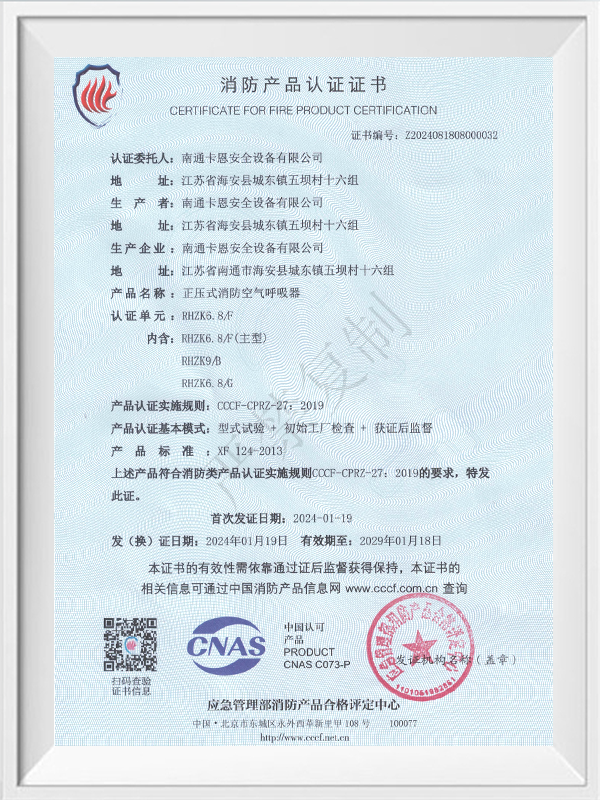
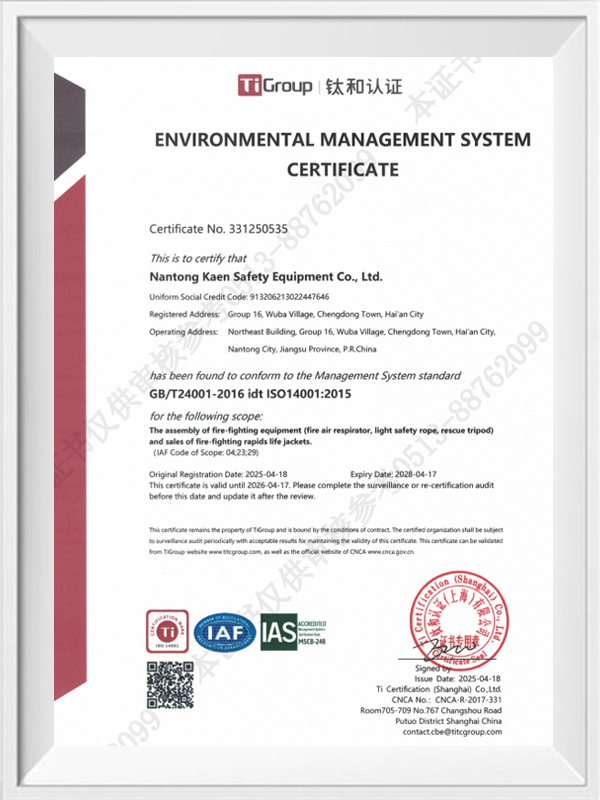
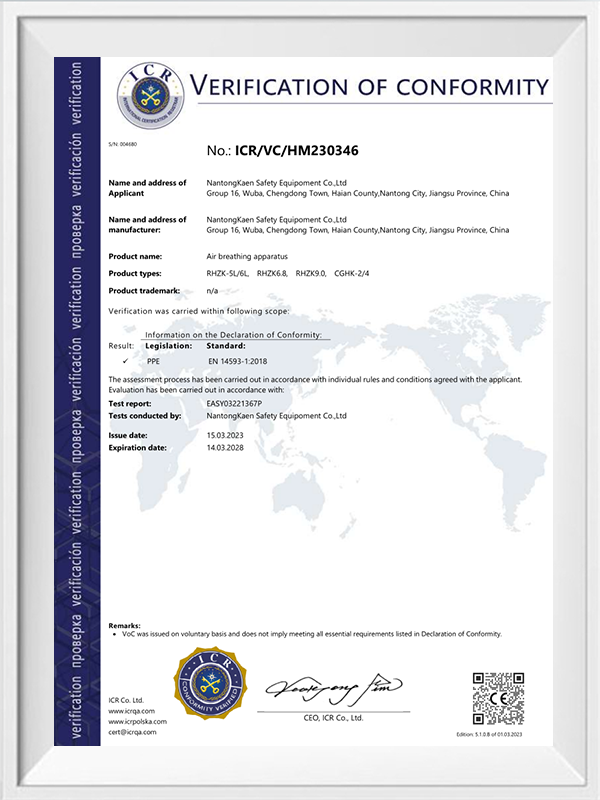
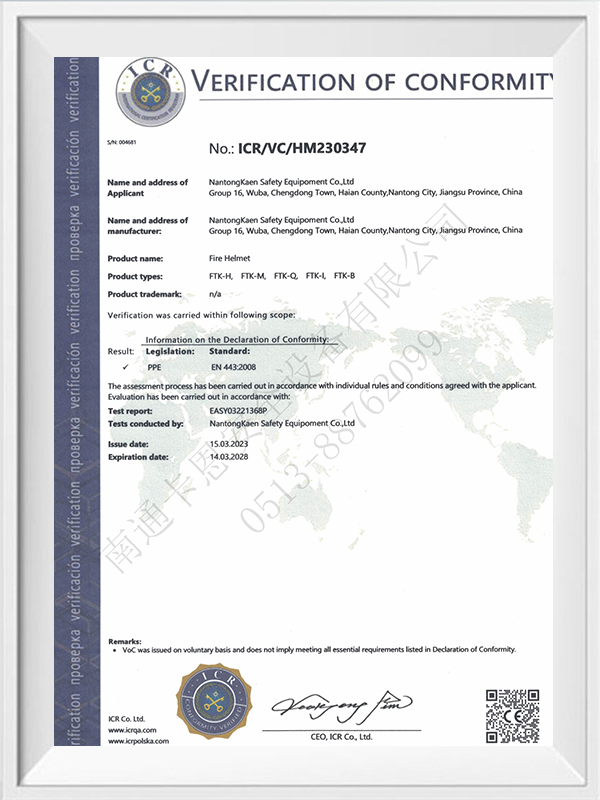
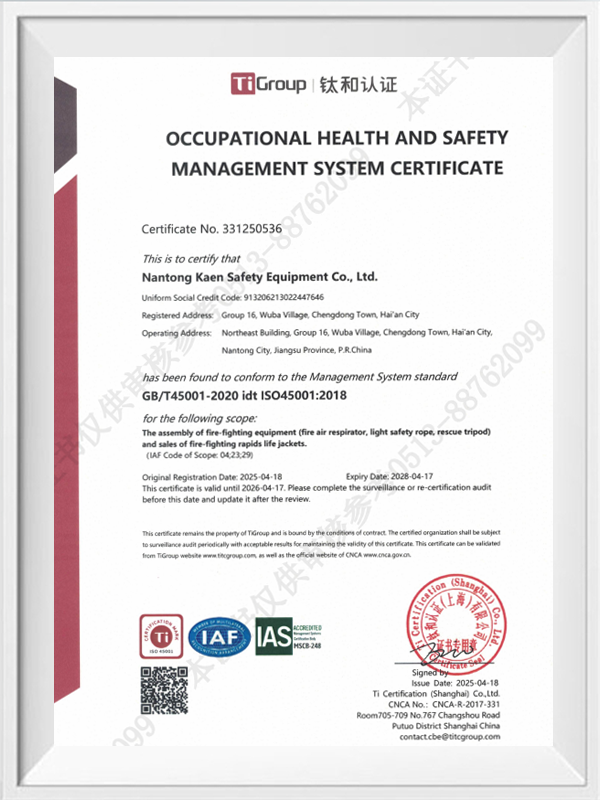
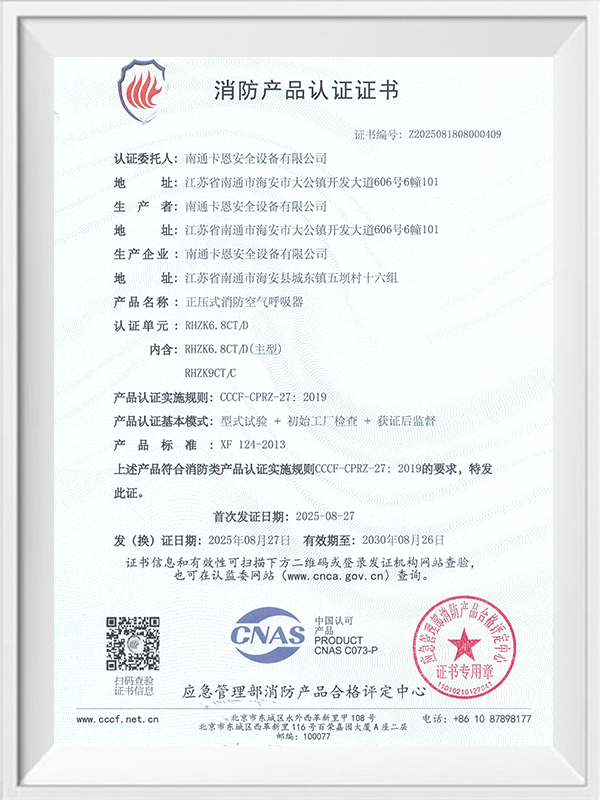
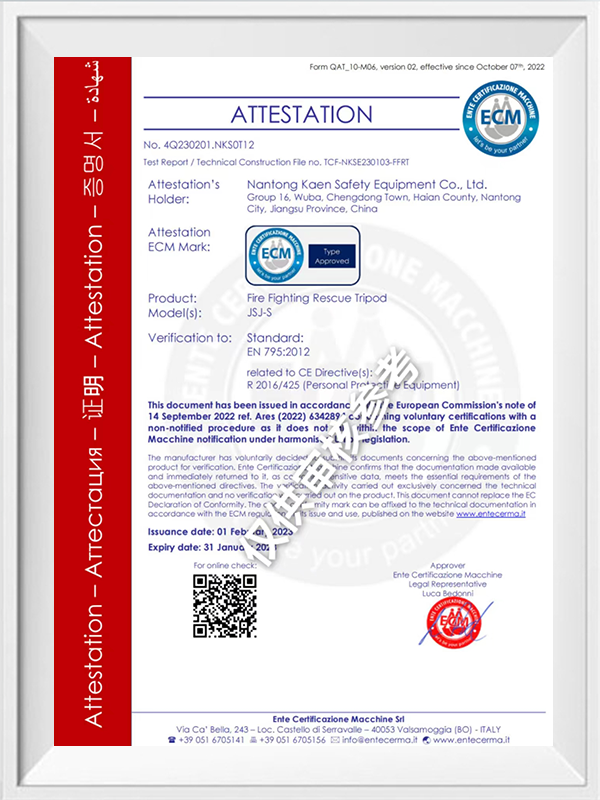
Covering a floor area of 5,000 square meters, our company is equipped with modern and advanced production equipment and a team of professional management personnel. We have obtained the ISO9001 International Quality Management System Certification, and our products have passed the CE, CCCF, and other relevant certifications. Endowed with strong technical strength, we now have 36 technical personnel, including 5 senior engineers and 8 engineers. Our robust technical capabilities provide a solid guarantee for product after-sales services. However, the existing safety product service sector is still far from fully addressing people's demands for fire protection, safety,y and occupational health in work and daily life.
As one of the leading manufacturers in the fire protection industry, Nantong Kaen Safety Equipment Co., Ltd. is a Rescue Knife Manufacturer and OEM Rescue Knife Company, specializes in the R&D, production and sales of a full range of products, including air breathing apparatus series, fire helmet series, fall protection series (rescue tripods, safety ropes), hydraulic breaking and dismantling tool sets, personal protective equipment and other special protection equipment and facilities.
Our products are widely applied in the fire protection, metallurgy, chemical industry, military, police, and other public safety sectors. We provide customers with 24/7 uninterrupted services and always adhere to the three core principles: the most favorable price, superior quality,y and excellent service.
We are dedicated to providing first-class fire safety equipment and high-quality after-sales services for customers at home and abroad, and we look forward to cooperating with people from all walks of life.
We know we must go all out!
Kaen is your safety guardian, and Kaen will be with you forever!
A worker at the bottom of a manhole collapses. The entry team has a tripod, a winch, and a full-body harness. But if that harness has only a back D-ring, the retrieval line can lift the worker at an ...
A paint shop supervisor we worked with used to order disposable masks by the case. Then the primer changed to a solvent based product, odour breakthrough became a daily complaint, and the real proble...
A supervisor pulls a glove off at the end of a shift and finds a small puncture near the base of the thumb. The glove carried an ANSI puncture level 4 marking. The wire still went through. Nothing pr...
A technician on a metal finishing line pulls on a thin nitrile glove that shrugs off the degreasing tank and splits on the first sharp flange. On the next shift a glass handler wears an aramid cut gl...
A maintenance technician walks along a 14-meter loading platform edge, clipping a lanyard to a steel cable overhead. The cable runs between two anchor points and passes through intermediate brackets....
A Rescue Knife is a purpose-built cutting tool designed to quickly sever rope, webbing, fishing line, or entangling material during a water or rope-based rescue, often under time pressure and in conditions where a standard folding knife would be slow or unsafe to deploy. Its defining features typically include a blunt or rounded tip to avoid puncturing flotation devices or injuring a victim, a serrated edge section for cutting through tough synthetic line quickly, and a sheath or holster designed for one-handed access even while wearing gloves. This combination of features separates a genuine rescue knife from a general-purpose utility blade, which usually lacks the safety-oriented tip design and rapid-access mounting that rescue scenarios demand.
The direct takeaway for safety teams is that rescue knife selection should be based on measurable factors: cutting speed through common rope materials, corrosion resistance in wet or saltwater environments, one-handed deployment speed, and mounting compatibility with a harness or flotation device. This article walks through measured performance data, corrosion trends, and structural comparisons to give a clear, practical basis for selecting and carrying this equipment category.
Core Performance Metrics Across Blade Configurations
When evaluating a rescue knife, five metrics matter most: cutting speed through synthetic rope, corrosion resistance, one-handed deployment speed, tip safety design, and grip security when wet. The horizontal bar chart below scores a serrated fixed-blade rescue knife against a smooth-edge folding utility knife across these categories on a 0-100 index built from typical field performance ranges. The rescue-grade serrated blade scores highest on cutting speed and deployment speed, since its design is specifically optimized for rapid line-cutting under pressure, while the folding utility knife scores lower on tip safety, reflecting its pointed design that was not built with entanglement rescue in mind.
This index-based comparison confirms that a purpose-built rescue knife is optimized specifically for rapid, safe line-cutting rather than general utility tasks, which is exactly the specialization that matters most in an active entanglement or rope emergency. Understanding this profile helps safety teams select equipment matched to its intended rescue role rather than substituting a general-purpose blade.
Cutting Time Behavior Across Rope Materials
A key operational metric for a rescue knife is how quickly it can sever different rope and line materials commonly encountered during water and rope rescue. The line chart below tracks average cutting time in seconds across five common material types, from lightweight fishing line up to thick braided nylon rope. Cutting time naturally increases with material thickness and fiber density, but the increase should remain proportional and predictable rather than showing an unexpectedly sharp jump, which would indicate a blade edge or serration design issue. This kind of material-specific data helps rescue teams understand realistic cutting expectations before relying on the tool in an actual emergency.
Cutting time increases from roughly 0.3 seconds for fishing line to about 2.8 seconds for thick braided nylon rope, a proportional progression that reflects expected material resistance rather than any inconsistency in blade performance. This data underscores why serration design and blade edge maintenance matter so much for a rescue knife, since even a small increase in cutting time can be significant during an active entanglement emergency.
Where Rescue Knives Are Commonly Deployed
The application spread of a rescue knife reflects the range of entanglement and line-cutting risks encountered across different rescue disciplines. The vertical bar chart below shows a representative usage breakdown across common categories, based on aggregated field usage patterns. Swiftwater and river rescue leads the distribution, followed by boating and marine safety, rope access and technical rescue, and general flood response operations.
Swiftwater rescue accounts for roughly 34% of typical deployment, reflecting the frequent risk of rope, strap, or debris entanglement in moving water. Boating and marine safety follows closely, since a rescue knife is commonly carried aboard to quickly cut rigging, fishing line, or mooring rope in an emergency situation.
Fixed-Blade Rescue Knife Versus Folding Utility Knife
A radar chart helps visualize the trade-off between a fixed-blade rescue knife and a general folding utility knife across multiple dimensions simultaneously. The chart below compares both across deployment speed, tip safety, cutting reliability under wet conditions, one-handed operation, and general-purpose versatility. The fixed-blade rescue knife extends further on deployment speed, tip safety, and one-handed operation, since there is no folding mechanism to manipulate under pressure, while the folding utility knife extends further on general-purpose versatility, since it can serve a broader range of everyday cutting tasks beyond emergency rescue.
Neither shape covers every dimension, reinforcing why a dedicated rescue knife is typically carried specifically for emergency line-cutting rather than replacing a general-purpose folding knife entirely. Rescue personnel commonly carry both, reserving the fixed-blade rescue knife for its rapid, safety-oriented deployment in genuine entanglement emergencies.
Practical Selection and Maintenance Guidance
Choosing the right rescue knife starts with matching blade design, mounting method, and corrosion resistance to the specific rescue discipline and environment. The table below summarizes practical guidance across common scenarios.
Scenario-Based Selection Reference
Table 1: Practical guidance for rescue knife selection by scenario
Scenario
Suitable Choice
Reason
Swiftwater entanglement risk
Fixed-Blade Rescue Knife
Rapid one-handed deployment
Marine and boating use
Corrosion-Resistant Rescue Knife
Withstands saltwater exposure
Rope access technical rescue
Serrated Blade Rescue Knife
Fast cutting through thick line
General everyday utility tasks
Folding Utility Knife
Broader general-purpose versatility
Before relying on a rescue knife in the field, a few additional checks help support safe and reliable use:
Inspect the blade edge and serrations regularly for dullness or damage.
Verify the sheath or mounting system allows quick, secure one-handed access.
Check for corrosion or rust, especially after saltwater exposure, and clean thoroughly after each use.
Confirm the blunt tip design remains intact to avoid accidental puncture injuries.
Practice rapid deployment and cutting technique during routine training sessions.
The predictable cutting curve discussed earlier depends on consistent manufacturing of the blade steel, serration geometry, and sheath mounting hardware inside a rescue knife. Variation in steel hardness or serration spacing can shift both cutting speed and edge retention over repeated use, which is why tight process control matters throughout production. Automated grinding and in-process cutting tests help keep the blade performing within tight tolerances across production batches, supporting the reliability data referenced throughout this article.
Standard quality checkpoints such as cutting performance testing, corrosion resistance verification, and sheath retention inspection support the performance trends shown earlier. For safety officers sourcing rescue knives at scale, confirming these quality checkpoints with a supplier is often as valuable as reviewing published specifications alone.
About Nantong Kaen Safety Equipment Co., Ltd.
Nantong Kaen Safety Equipment Co., Ltd. is a professional enterprise engaged in the production and sales of fire safety protection equipment, including rescue knives used across swiftwater, marine, and rope access rescue applications. The company is located in Haian, a renowned county in Jiangsu Province, and is situated within the National Economic Development Zone of Haian, Jiangsu, offering convenient transportation and well-developed logistics support for both domestic and international customers.
Drawing on its location within a well-connected industrial zone, the company focuses on producing reliable safety equipment while maintaining efficient logistics that support timely delivery. This combination of manufacturing focus and logistical positioning allows Nantong Kaen Safety Equipment Co., Ltd. to serve fire departments and water rescue organizations seeking dependable rescue knife solutions for emergency line-cutting needs.
Frequently Asked Questions
Q1: Why does a rescue knife typically have a blunt or rounded tip?
A1: The blunt tip design reduces the risk of accidentally puncturing flotation devices or injuring a victim while cutting through entangling material during a rescue.
Q2: How does a serrated edge improve cutting performance?
A2: Serrations grip and saw through tough synthetic rope and webbing fibers more effectively than a smooth edge, which is why many rescue knives combine both edge types.
Q3: Why is corrosion resistance important for a rescue knife?
A3: Frequent exposure to fresh or saltwater can degrade blade steel over time, so corrosion-resistant materials help maintain cutting performance and reliability across repeated field use.
Q4: Can a folding utility knife replace a dedicated rescue knife?
A4: Not reliably for emergency use, since a folding mechanism slows one-handed deployment and typically lacks the blunt-tip safety design built into a purpose-made rescue knife.
Q5: What manufacturing factors most affect rescue knife reliability?
A5: Blade steel quality, serration geometry, and sheath mounting hardware precision are key factors, supported by process checks such as cutting performance testing and corrosion resistance verification during production.


 English
 Español
 中文简体
中文简体