
 English
 Español
 中文简体
中文简体Description: The fire boots are made up of 2 parts, the shoe and the boot upper. Black colour with yellow lines. Multi-layers for the whole body. Smash-proof steel toes of the fire boots have inside &...
See Details
2026-09-25
Content
A technician on a metal finishing line pulls on a thin nitrile glove that shrugs off the degreasing tank and splits on the first sharp flange. On the next shift a glass handler wears an aramid cut glove that ignores the edges and soaks through in minutes. Both gloves passed a specification. Neither passed the job.
Chemical and cut resistant gloves are two performance claims that have to be bought together, and they are measured on two separate test tracks. Name the exact chemical, set a minimum breakthrough time in minutes, and set a cut level in newtons from a standardized blade test.
Buyers get into trouble when a supplier answers a question nobody asked. Chemical resistant on its own means very little, because resistance always refers to one substance at one concentration. Cut resistant means just as little, because a level 3 glove and a level F glove can carry the same marketing sentence in different markets.
A workable specification carries two values side by side: a breakthrough time for a named chemical, and a cut level from a standardized test. Coating, liner, cuff length and size range all follow from those two numbers.
| Protection track | Test standard | What the result means | What to specify |
|---|---|---|---|
| Chemical permeation | EN 16523-1 or ASTM F739 | Minutes before a chemical passes through the material | Name the chemical and require at least 30 minutes |
| Chemical penetration | EN 374-2 | No leaks through pinholes, seams or pores | Ask for an air leak test result per batch |
| Cut resistance, Europe | EN 388:2016 with ISO 13997 | Newtons of blade force to cut through, graded A to F | State the letter and the force value |
| Cut resistance, North America | ANSI/ISEA 105 | Grams of load to cut, graded A1 to A9 | Match the level to the blade and handling time |
| Abrasion and puncture | EN 388 coup test | Cycles to abrade and newtons to puncture | Check these scores are not hiding a weak cut result |
Ask for the test report rather than the marketing sheet. A genuine report names the chemical, its concentration, the breakthrough time and the issuing laboratory. A supplier who cannot produce that document for your process is offering an unverified glove.
Three failure modes hide behind the word resistance. Permeation is the slow movement of molecules through the material, and it happens even when the glove looks flawless. Penetration is a physical leak through a pinhole or seam. Degradation is a change in the material itself, such as swelling or stiffening, which destroys the barrier before anything has passed through.
EN 374 grades gloves on permeation time. Level 1 requires more than ten minutes of resistance, level 2 more than thirty minutes, and level 6 more than eight hours. Type A covers six chemicals tested to level 2 or better, Type B covers three, and Type C covers one.
Each column is a breakthrough threshold set by EN 374, not a description of glove thickness. Level 1 only requires more than ten minutes of resistance, while level 6 requires more than eight hours. Most industrial work sits at level 2, the thirty minute mark, because that is roughly the time a worker needs to notice a splash and strip the glove. Type A classification needs six chemicals at level 2 or better, Type B needs three, and Type C needs one. A level only counts when it is written next to a named chemical.
Breakthrough testing uses a sample of the palm material, not the finished glove, so seams, cuffs and coating faults stay outside the result. That gap between a laboratory sample and a production batch is where many chemical injuries begin.
EN 388:2016 reports cut resistance with a letter from A to F, based on the ISO 13997 blade test and expressed in newtons. The older coup test still appears on labels, but it loses accuracy against hard or blunt materials such as glass fibre and steel wire. North American buyers see the same idea on another scale: ANSI/ISEA 105 grades cut performance from A1 at 200 grams to A9 at 6000 grams.
The letters run from A at two newtons to F at thirty newtons, and the gaps between them are uneven. Climbing from D to F adds fifteen newtons of blade force, which is why the top letters usually need engineered yarns rather than coatings. Light assembly work rarely justifies more than level C, while glass and sheet metal handling usually calls for level D or higher. The letters come from the ISO 13997 blade test, not from the older coup test, so glass fibre and steel liners must be judged on the letter. Two gloves claiming level E can still behave differently after ten washes, so ask for the force value as well as the letter.
The two barriers are built from materials that dislike each other. A chemical barrier needs a continuous, pinhole-free film. Cut resistance needs hard fibres such as HPPE, aramid or glass, and those fibres create a porous structure that wicks liquid. A cut liner soaked in solvent holds it against the skin for the whole shift, which can be worse than wearing no liner at all. Coatings close part of that gap, but a coating that cracks under repeated flexing stops being a barrier on the day it fails.
The five axes score four common constructions on the same scale, with the outer ring as the best possible result. Thin nitrile wins on dexterity and oily grip but collapses on cut resistance because it has no engineered liner. Nitrile-coated HPPE is the balanced shape in the middle and covers most industrial assembly work. Unsupported butyl reaches the outer ring on chemical barrier and stays near the centre on cut resistance. No single shape fills the chart, which is the honest reason dual protection usually means two layers.
Thicker material resists permeation for longer, and every extra layer costs dexterity. That trade is worth measuring rather than guessing, because a glove too stiff to wear properly protects nobody. Reusable gloves also age: nitrile stiffens, neoprene swells, and coatings lose grip long before a hole appears.
The curve shows why thickness is the first specification buyers reach for and the last one they should accept alone. Moving from 0.3 mm to 0.7 mm lifts expected breakthrough from minutes into more than an hour in this illustrative model. Past 1.0 mm the curve keeps climbing, but feel, grip and comfort fall away quickly. The figures model one solvent against one rubber compound, so your own EN 16523-1 report will look different. If a supplier offers a thinner glove with the same breakthrough time, ask what film structure made that possible.
Most jobs fall into a few recognisable patterns, and each one points to a different balance of the two numbers.
Many workers need two pairs in a shift. Changing gloves between the solvent station and the cutting station takes seconds and removes the compromise, which is usually cheaper than one premium glove that does both jobs badly.
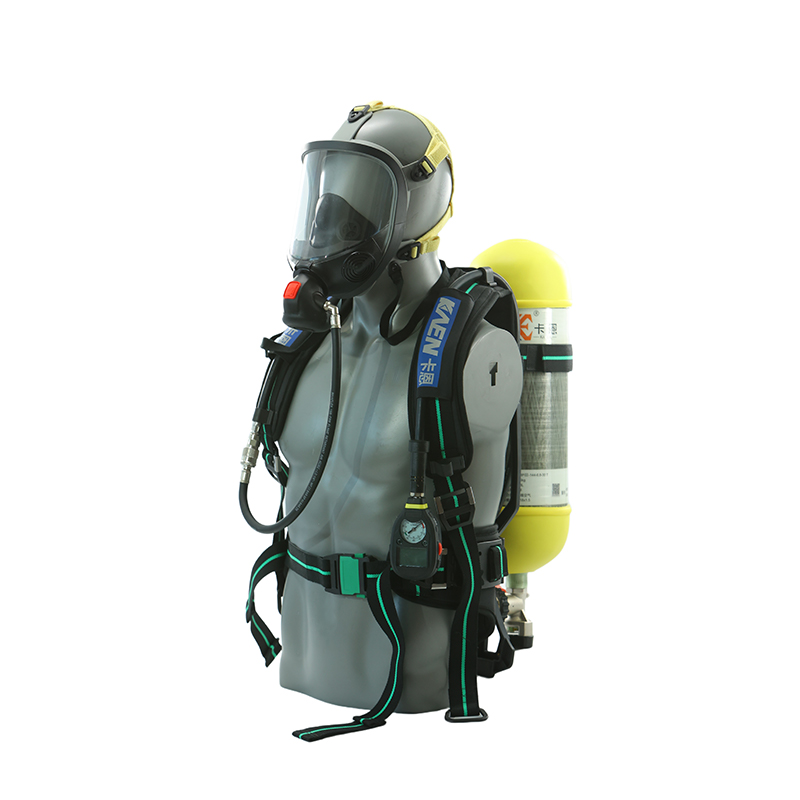 Custom Emergency Rescue Equipment and Personal Protective Equipment SupplierProduct page covers a factory supplying emergency rescue gear and PPE, including air respirators, gas masks, fall protection, firefighting helmets, water rescue and life jackets. Nearby guidance addresses work gloves, batch traceability and reusable-glove leak testing.View Product →
Order documentation as well as gloves. Ask for a batch test report, lot traceability, and the material thickness with its tolerance. For reusable gloves, request an air inflation or water leak test per batch, because a pinhole of a few tenths of a millimetre is invisible on a shelf and obvious inside a tank.
Check shelf life and storage too. Nitrile, neoprene and butyl all have a finite service window, and gloves stored in sunlight or in a hot container arrive already aged. Set a replacement interval based on exposure and inspection, not on how long the glove still looks usable.
Suppliers with a documented quality system make this easier. Kaen Safety Equipment, based in the Hai'an Economic Development Zone in Jiangsu, operates a 5,000 square metre plant with 36 technical staff and holds ISO 9001, CE and CCCF certification across its protective equipment range. More background is available on the company page.
Fit decides whether a glove stays protective for a full shift. Measure the palm circumference and the middle finger length; a glove that is short in the fingers pulls the thumb crotch tight and splits there first, while an oversized glove rolls at the fingertips and weakens grip.
Inspect reusable gloves before every use against a light source, looking for discolouration, tackiness, stiff patches and stretched pinholes. Remove them by peeling from the cuff without touching the outer surface, and wash hands afterwards. Never share a reusable chemical glove between workers, because contamination on the inside is the failure nobody checks for.
Two numbers do most of the work in a glove specification: a breakthrough time for a named chemical, and a cut level from a standardized blade test. Ask for the reports behind both, match the levels to the actual solvent and blade in the task, and replace gloves on a schedule rather than on appearance. To turn a job description into a specification, contact the team with the chemicals, the cutting tools and the shift length.
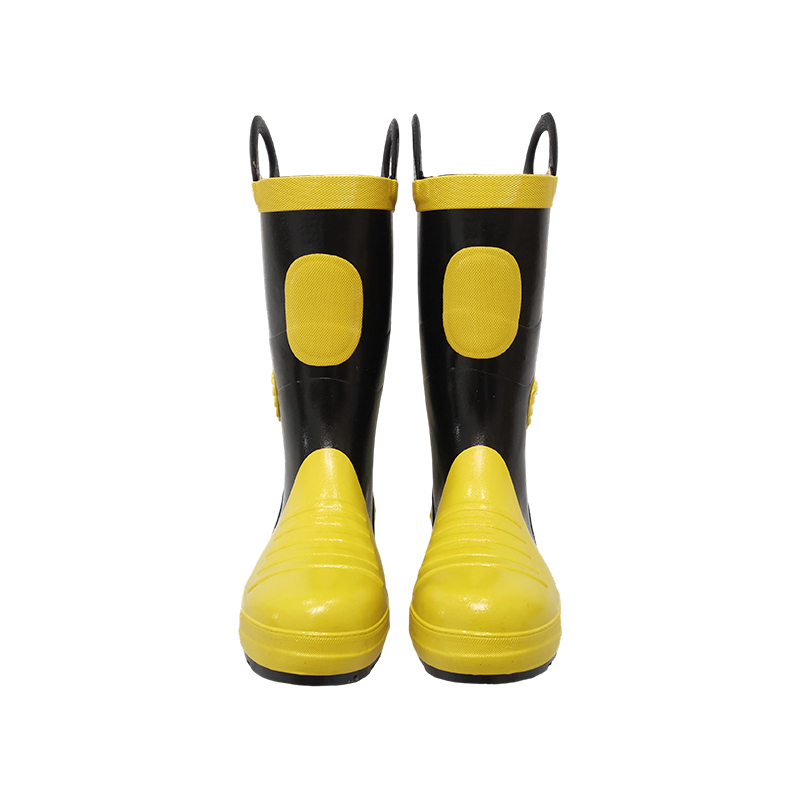
Description: The fire boots are made up of 2 parts, the shoe and the boot upper. Black colour with yellow lines. Multi-layers for the whole body. Smash-proof steel toes of the fire boots have inside &...
See Details
For any questions and feedback from customers, we will reply patiently and meticulously.


WhatsApp: 8618262215597
PHONE : +86-15370678666
EMAIL : zhouli@ntkaen.com
TEL: +86-513-88762099
Nantong Kaen Safety Equipment Co., Ltd. All Rights Reserved. ALL RESERVED. OEM Rescue Equipment Manufacturer Fire Protection Equipment Factory
