
 English
 Español
 中文简体
Introduction:The pressure gauge and remaining-air alarm are integrated into a single unit, providing both cylinder pressure display and an audible alarm when the cylinder reaches its designated limit....
See Details
2026-10-23
Content
Choose by the air you are working in, not by price. Filtered air masks clean the surrounding air and are the right choice when oxygen is normal (at least 19.5 percent) and the contaminant is known and measured. Powered air masks do the same cleaning with a blower, which lowers breathing effort for long shifts. Supplied air systems bring clean air from a separate source and are the only option when oxygen is low or the atmosphere is immediately dangerous to life or health (IDLH).
For most industrial, laboratory, agricultural and emergency-response tasks with known gases and vapors, a Full-face gas mask with the correct filter is the practical starting point. It protects the lungs, eyes and face in one unit, and it has a higher assigned protection factor than a half mask. The rest of this guide explains where each type stops being safe, so you can decide with confidence.
The phrase "fresh air mask" is used loosely, so it helps to separate the three families by where the breathing air comes from.
The wearer's own breathing pulls room air through a filter or cartridge. The filter removes particles, gases, vapors or a combination. Nothing is added to the air, so the mask can only work if the surrounding air already contains enough oxygen.
A battery-driven blower pushes air through the filter and into a facepiece, hood or helmet. Because air is delivered under slight positive pressure, breathing is easier and leakage is less likely. It is still an air-purifying system, so the same oxygen limit applies.
Clean air comes from a compressed air cylinder (self-contained breathing apparatus, SCBA) or from a compressor or cylinder bank through a hose (airline respirator). The wearer does not depend on the room air at all.
The table below uses the assigned protection factor (APF) from OSHA 29 CFR 1910.134, Table 1. The APF is the level of protection a properly fitted, properly used respirator is expected to give. An APF of 50 means the air inside the mask should contain no more than one-fiftieth of the outside concentration.
| Type | Air source | APF with full facepiece | Low oxygen or IDLH use | Main limitation |
|---|---|---|---|---|
| Filtered air (full-face) | Room air through filter | 50 | No | Filters wear out; needs a known contaminant |
| Powered air (tight-fitting full facepiece) | Blower and filter | 1000 | No | Battery, weight, higher cost |
| Supplied air, continuous flow airline (full facepiece) | Remote clean air via hose | 1000 | Not for IDLH on its own | Hose limits movement; air quality must be controlled |
| SCBA, pressure-demand (full facepiece) | Carried cylinder | 10000 | Yes | Limited duration, heavy, training heavy |
Source: OSHA 29 CFR 1910.134, Table 1, Assigned Protection Factors. For comparison, the same table gives a half mask air-purifying respirator an APF of only 10, which is why switching to a full facepiece raises the protection level five times.
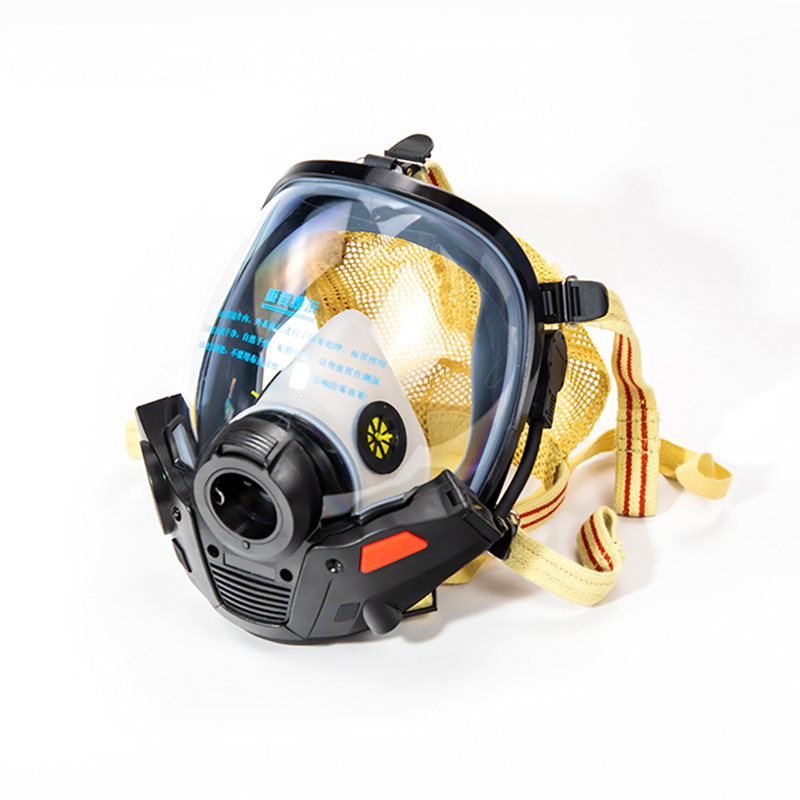
A filtered air mask is the simplest and most economical system, and it covers a large share of real tasks. It is appropriate when all of the following are true:
Typical examples include spray painting in a ventilated booth, handling pesticides in a greenhouse, laboratory solvent transfer, battery room maintenance, and short exposure to ammonia during refrigeration service. In each case the contaminant is known, oxygen is normal and the task can be planned.
Many gases irritate or damage the eyes before the lungs. Ammonia, chlorine and acid vapors are common examples. A half mask leaves the eyes exposed, while a Full-face gas mask seals the whole face, protects the eyes from splashes and vapors, and gives a wider field of view than goggles worn over a half mask.
A mask is only as good as the filter on it. Under the European standard EN 14387, filters are color coded by gas type. The color on the filter must match the hazard.
| Filter type | Color | Protects against |
|---|---|---|
| A | Brown | Organic gases and vapors with boiling point above 65 degrees Celsius |
| B | Grey | Inorganic gases and vapors such as chlorine |
| E | Yellow | Sulfur dioxide and acid gases |
| K | Green | Ammonia and organic ammonia derivatives |
| P | White | Particles, dust, mist and fumes |
Source: EN 14387 gas and combined filter color coding. In the United States, NIOSH approves cartridges by hazard category (for example organic vapor, acid gas, ammonia) and particulate filters by efficiency, such as N95 at 95 percent and P100 at 99.97 percent.
OSHA 29 CFR 1910.134(d)(3) requires employers to set a cartridge change schedule based on objective information, or to use an end-of-service-life indicator. Waiting until you smell the contaminant is not an acceptable method, because some gases cause olfactory fatigue and others are dangerous below the smell threshold. A practical approach is to record the first use date, the hours in use and the concentration, and then replace the filter before the calculated limit.
A powered air system keeps the same filtering principle but adds a blower. This changes comfort and protection in three ways.
Under NIOSH requirements, a PAPR with a tight-fitting facepiece must deliver at least 115 liters per minute (4 cubic feet per minute), and loose-fitting hoods and helmets must deliver at least 170 liters per minute (6 cubic feet per minute). Source: 42 CFR Part 84, NIOSH respirator approval regulation.
Powered air suits long tasks with moderate contamination, such as welding fume control, grinding, pharmaceutical powder handling and agricultural spraying in hot weather. Keep in mind that it is still a filtering system. It cannot be used in oxygen-deficient air, and a battery failure must be part of the work plan.
Switch to supplied air when any of these conditions applies: oxygen below 19.5 percent, an unknown atmosphere, a contaminant without a suitable filter, a concentration above the filter limit, or any IDLH condition. Confined space entry, tank cleaning, chemical spill response in unknown conditions and firefighting all fall into this group.
An airline system connects the facepiece to a remote air source by hose. It allows long working time without carrying a cylinder. NIOSH approval limits the hose length to 300 feet, about 91 meters (42 CFR Part 84). The air must meet Grade D breathing air quality as required by OSHA 29 CFR 1910.134(i), which includes oxygen between 19.5 and 23.5 percent, carbon monoxide at no more than 10 ppm and carbon dioxide at no more than 1000 ppm. Compressors must have a carbon monoxide alarm or a high-temperature alarm.
SCBA carries its own air, so the wearer is free to move without a hose. Approved models are rated for 30, 45 or 60 minutes, although real working time is shorter under heavy effort. A pressure-demand full-face SCBA has an APF of 10000, the highest of any respirator class (OSHA 29 CFR 1910.134, Table 1). Because of weight, cost and training needs, SCBA is normally kept for emergency and IDLH work, not routine tasks.
| Situation | Recommended type | Reason |
|---|---|---|
| Known solvent vapor, normal oxygen, short task | Full-face gas mask with organic vapor filter | Simple, protects eyes, low cost |
| Ammonia leak during refrigeration service, concentration measured | Full-face gas mask with ammonia filter | Eye protection is critical for irritant gases |
| Eight-hour grinding and welding in warm conditions | Powered air with hood or full facepiece | Lower effort, cooler face |
| Tank, pit or confined space entry | Airline with escape cylinder, or SCBA | Oxygen may be low and gases may be unknown |
| Unknown chemical release or firefighting | Pressure-demand SCBA | IDLH conditions need the highest protection |
For many workplaces, the most common hazards are known gases and vapors in normal oxygen. That is exactly where a filtered air system performs well, and the Full-face gas mask from Kaen is designed for this type of use. It gives the user a full facepiece for face and eye protection, and it works with replaceable filters so the same mask can be matched to different hazards.
Before purchasing any mask, check these points on the product page and with your safety officer:
The best mask will fail without a seal. Tight-fitting respirators, which include full-face masks and tight-fitting powered air masks, need a fit test before first use and at least once a year. OSHA 29 CFR 1910.134(f) sets this rule. Facial hair that crosses the sealing surface is not allowed with tight-fitting masks (1910.134(g)(1)). Workers should also receive a medical evaluation before using a respirator (1910.134(e)), because breathing through a mask adds physical load.
No. A gas mask cleans the surrounding air through a filter, and it cannot be used where oxygen is below 19.5 percent. Supplied air provides separate breathing air.
It has a higher APF and lower breathing effort, but it still depends on the filter and on normal oxygen. It is safer in many cases, not in every case.
Start with the safety data sheet of the chemical, confirm the concentration, and match the filter type and color to the hazard. When several hazards exist, use a combined filter that covers all of them.
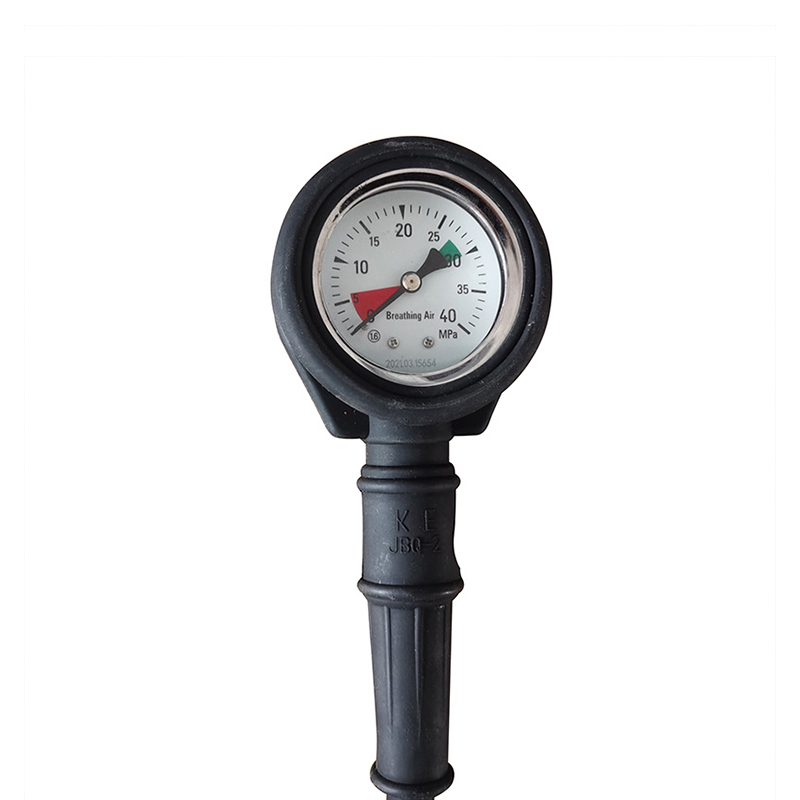
Introduction:The pressure gauge and remaining-air alarm are integrated into a single unit, providing both cylinder pressure display and an audible alarm when the cylinder reaches its designated limit....
See Details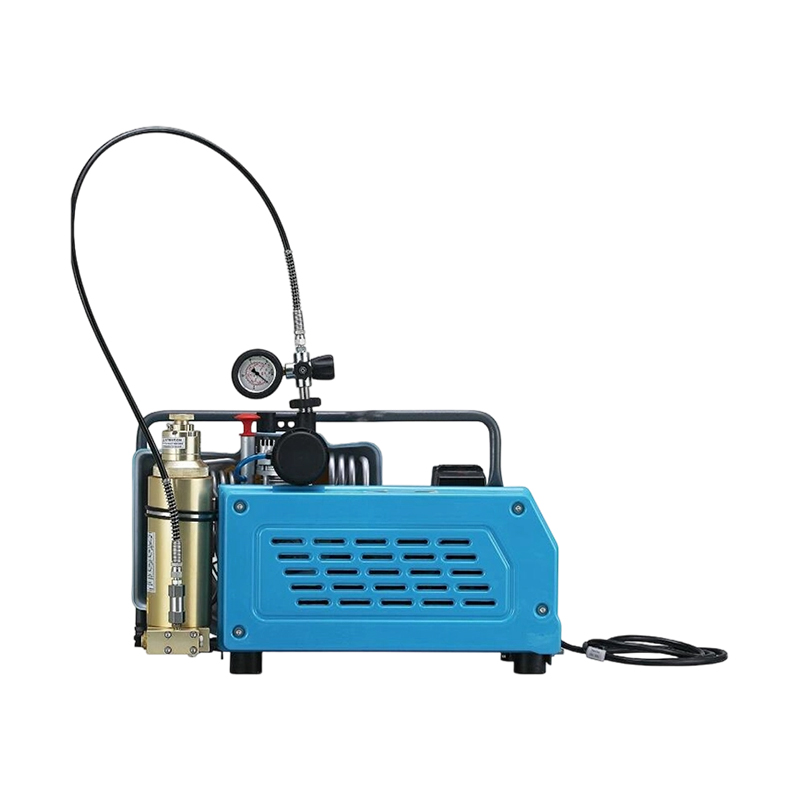
The air filling pump (100L 220V) is a specialized air source device that integrates high-pressure filling and emergency evacuation protection functions. With a filling capacity of 100L/min, this devic...
See Details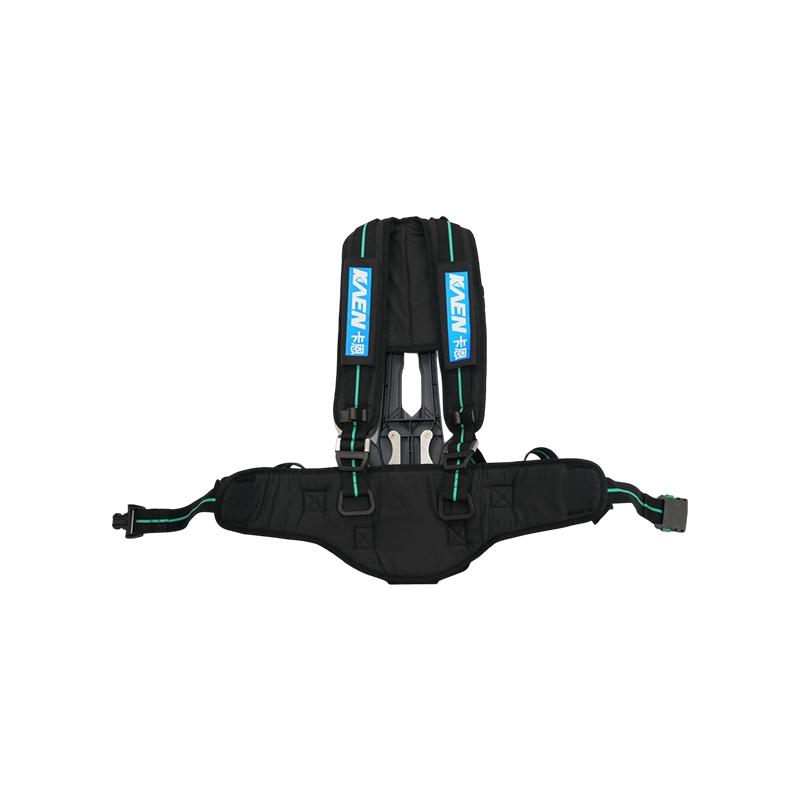
Introduction: The backplate frame supports and secures the cylinder and regulator. Weight is evenly distributed across the shoulders via adjustable shoulder and waist straps, ensuring a snug fit again...
See Details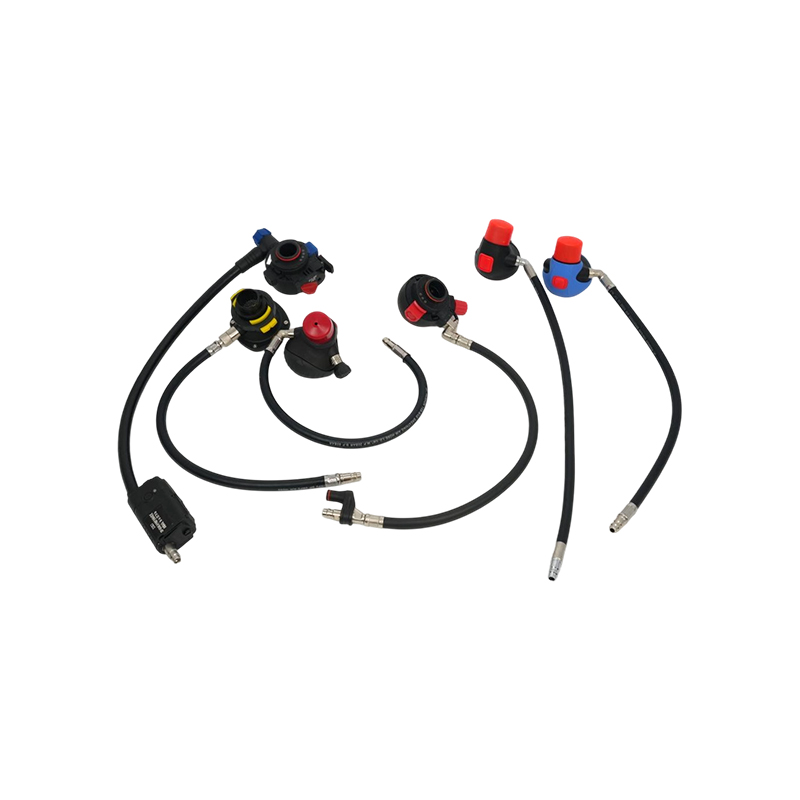
The air supply valve is an insert-type positive-pressure valve with an airflow rate exceeding 300-500 L/min. During use, simply insert the valve into the face mask and take a deep breath to activate t...
See Details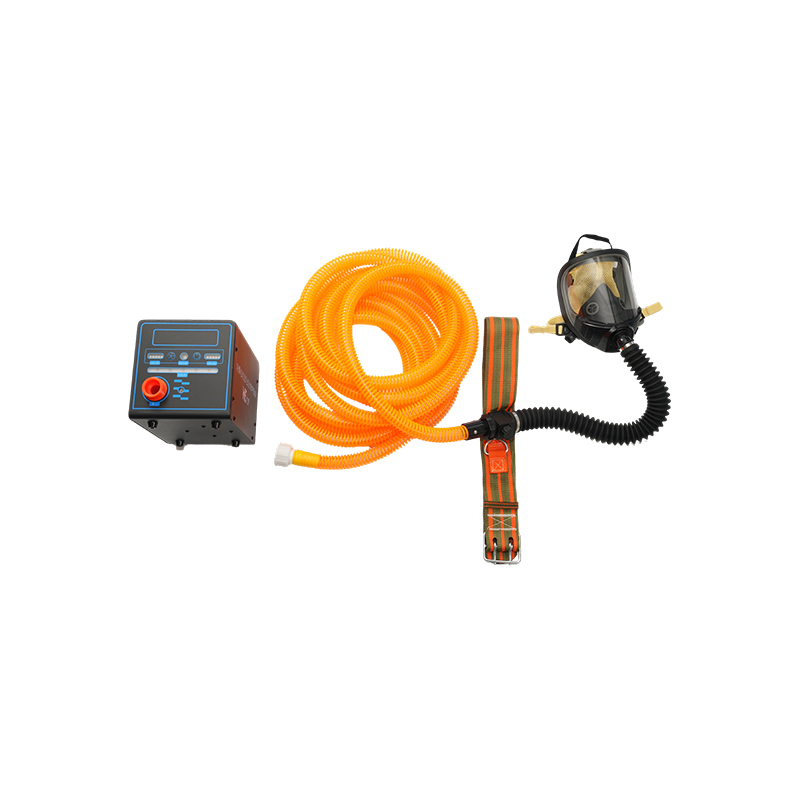
Product OverviewThis powered air-supply long hose respirator is designed for occupational respiratory protection, effectively filtering harmful gases, dust, smoke, and other pollutants, while compens...
See Details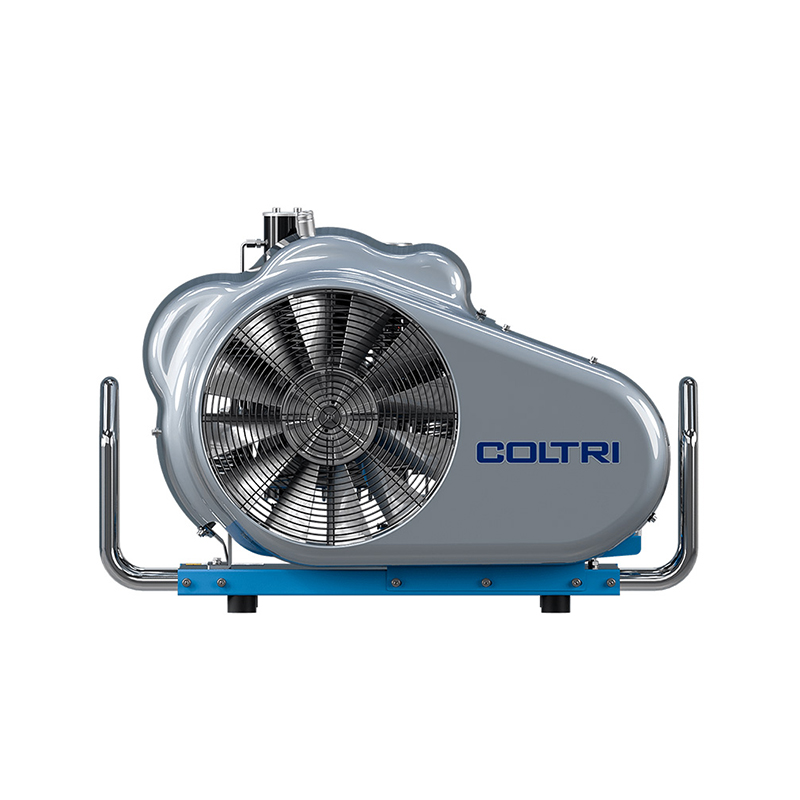
The MCH-16/ET SMART air filling pump (manual double cylinder) is a type of air filling equipment. Compared to similar products, it is equipped with a 3-stage compression, oil-lubricated air compressor...
See Details
For any questions and feedback from customers, we will reply patiently and meticulously.


WhatsApp: 8618262215597
PHONE : +86-15370678666
EMAIL : zhouli@ntkaen.com
TEL: +86-513-88762099
Nantong Kaen Safety Equipment Co., Ltd. All Rights Reserved. ALL RESERVED. OEM Rescue Equipment Manufacturer Fire Protection Equipment Factory
